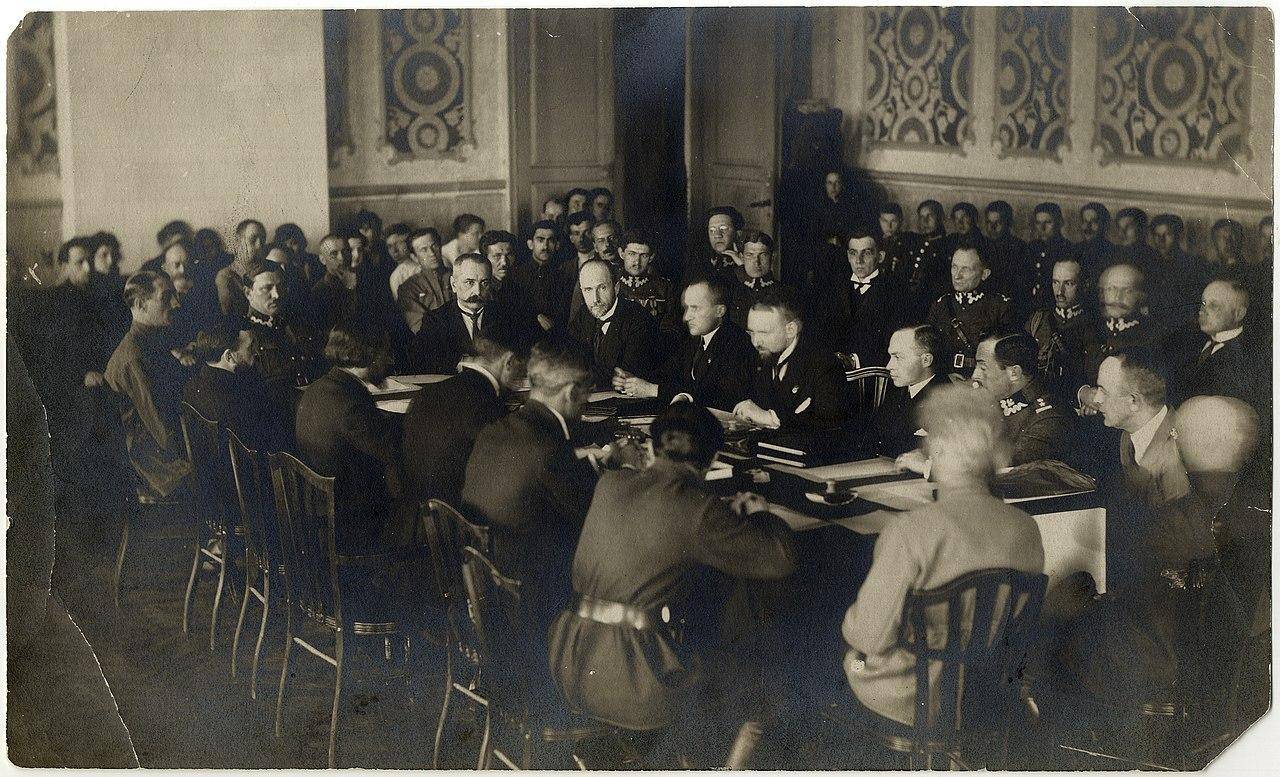
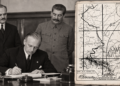
At 5.50pm on 12 October 1920, representatives of Poland, Soviet Russia and Soviet Ukraine signed preliminary peace terms in Riga.
The ceremony came after one of the most dramatic reversals of the Polish-Soviet War. Only two months earlier, Soviet armies had been approaching Warsaw. By October, after Polish victories at Warsaw and on the Niemen, the Red Army was retreating and Polish forces were once again advancing eastwards.
Yet victory on the battlefield did not automatically decide where Poland’s frontier would lie or what kind of political order would emerge between Poland and Soviet Russia.
- Find more news from Poland on our Homepage .
Those questions had to be negotiated.
The agreement signed in Riga established preliminary terms for peace and was accompanied by an armistice. It outlined an eastern frontier for the restored Polish state and committed the parties to continue negotiations towards a final treaty.
But the soldiers did not immediately stop fighting. The armistice was deliberately delayed for six days.
From the defence of Warsaw to negotiations in Riga
The war had developed out of the political vacuum left by the collapse of the Russian, German and Austro-Hungarian empires at the end of the First World War.
Poland had regained independence in 1918 but its eastern borders remained unsettled. At the same time, Bolshevik Russia was fighting a civil war and seeking to consolidate Soviet power across much of the former Russian Empire.
By 1920 the conflict had escalated dramatically.
Poland, allied with the Ukrainian leader Symon Petliura, launched an offensive into Ukraine and captured Kyiv in May. The Red Army then counter-attacked, forcing Polish troops into a long retreat.
By August, Soviet forces had reached the approaches to Warsaw.
The Polish victory in the Battle of Warsaw reversed that offensive. Another major Polish victory in the Battle of the Niemen in September further weakened Mikhail Tukhachevsky’s Western Front and restored the strategic initiative to Poland.
Diplomacy was moving alongside the military campaign.
Earlier negotiations had begun in Minsk while the Red Army appeared to hold the advantage. As the situation changed, the talks were transferred to neutral Latvia. The Riga peace conference formally opened on 21 September 1920.
Poland’s delegation was headed by Jan Dąbski, while the Soviet Russian delegation was led by Adolf Joffe.
Their task was not simply to acknowledge who had won the latest battle. They had to decide which territories would fall on either side of the frontier and how two states that had just fought a major war could disengage their armies.
The border was negotiated, not simply dictated by the front line
By the time the Riga negotiations reached their decisive stage, Poland held a much stronger military position than it had during the crisis before Warsaw.
That gave the Polish delegation leverage, but it did not produce a single obvious territorial solution.
The eastern lands of the former Polish-Lithuanian Commonwealth were ethnically, linguistically and politically complex. Poles, Ukrainians, Belarusians, Jews, Lithuanians and other communities lived across territories claimed by competing national movements and governments.
Poland itself was also divided over what its eastern policy should be.
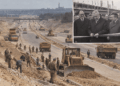
Józef Piłsudski had supported a federal concept in which independent states, particularly Ukraine, might form a wider political system separating Poland from Russia. Other influential Polish politicians, especially from the National Democratic camp, favoured a more compact Polish state and were wary of incorporating territories in which Poles would form a minority.
Those competing visions mattered at Riga.
The preliminary agreement drew the basic frontier well to the east of the line later commonly associated with British foreign secretary Lord Curzon, but it left Minsk on the Soviet side. Poland received large areas of what are today western Belarus and western Ukraine, including important railway connections and the region of Volhynia.
The agreement declared that the parties recognised the independence of Ukraine and Belarus and renounced claims to territories on the opposite side of the agreed frontier.
In practice, however, Poland was negotiating with Soviet Russia and Soviet Ukraine. Petliura’s Ukrainian People’s Republic, which had fought alongside Poland earlier in 1920, was not a party to the settlement.
This was one of the most consequential political choices emerging from the negotiations. The peace settlement increasingly replaced the attempt to construct an anti-Soviet Ukrainian ally with a direct territorial agreement between Poland and the Soviet side.
The war continued for another six days
Signing the preliminary peace on 12 October did not mean that the front immediately fell silent.
The accompanying armistice stipulated that military operations would cease 144 hours after the agreement was signed — at midnight on 18 October.
Until then, both armies could continue operations.
The unusual gap between agreement and ceasefire produced one of the final episodes of the war. On 15 October, Polish troops entered Minsk, even though the city lay beyond the frontier Poland had agreed to accept.
They could not remain there.
When the armistice took effect across the front on 18 October, Polish forces had to respect the line established through the negotiations.
The distinction is important. The political settlement was not simply a map drawn around whatever territory each army happened to occupy at the moment shooting stopped.
Negotiators had already agreed on the broad frontier before the final military movements ended.
From preliminary peace to the Treaty of Riga
The document of 12 October was deliberately preliminary.
Its terms required the parties to begin work immediately on a full peace treaty, while ratification was necessary before the preliminary agreement itself became legally binding. Ratification documents were exchanged on 2 November 1920.
Negotiations then continued through the winter.
The final settlement had to address far more than the position of the frontier. Questions included citizenship, repatriation, property, financial claims and the return of archives, cultural objects and other material removed from Polish lands during the period of Russian imperial rule.
The talks were difficult, and neither side regarded every element of the emerging settlement as satisfactory.
A final agreement was eventually reached after further negotiations between Dąbski and Joffe.
On 18 March 1921, Poland, Soviet Russia and Soviet Ukraine signed the Treaty of Riga.
The treaty formally ended the Polish-Soviet War and confirmed an eastern frontier that would remain Poland’s internationally recognised border with the Soviet republics for most of the interwar period.
It ran from the region of the Dvina in the north through what is now Belarus, across Polesie and into Volhynia and Galicia. Minsk remained on the Soviet side, while cities including Lwów — today Lviv in Ukraine — and Wilno, now Vilnius in Lithuania, became part of the political geography of the Second Polish Republic, although the Polish-Lithuanian dispute over Wilno followed a separate path.
The Riga settlement did not resolve every national question created by the collapse of the old empires. Large Ukrainian and Belarusian populations found themselves divided between Poland and Soviet republics, while Piłsudski’s broader federal project was effectively abandoned.
Nor did every provision of the final treaty work as intended. Disputes continued over property, cultural assets, financial obligations and the treatment of minorities.
But the decisive diplomatic turn had occurred months earlier.
On 12 October 1920, military success gave way to negotiation. Poland had stopped the Soviet advance and regained the battlefield initiative, but the frontier of the new state was ultimately established not simply by where its soldiers had reached, but by the political choices made around a negotiating table in Riga.