

When the German battleship Schleswig-Holstein opened fire on Westerplatte on 1 September 1939, the attack became one of the defining images of the beginning of the Second World War.
Less well known outside Poland is what happened only a few kilometres farther west.
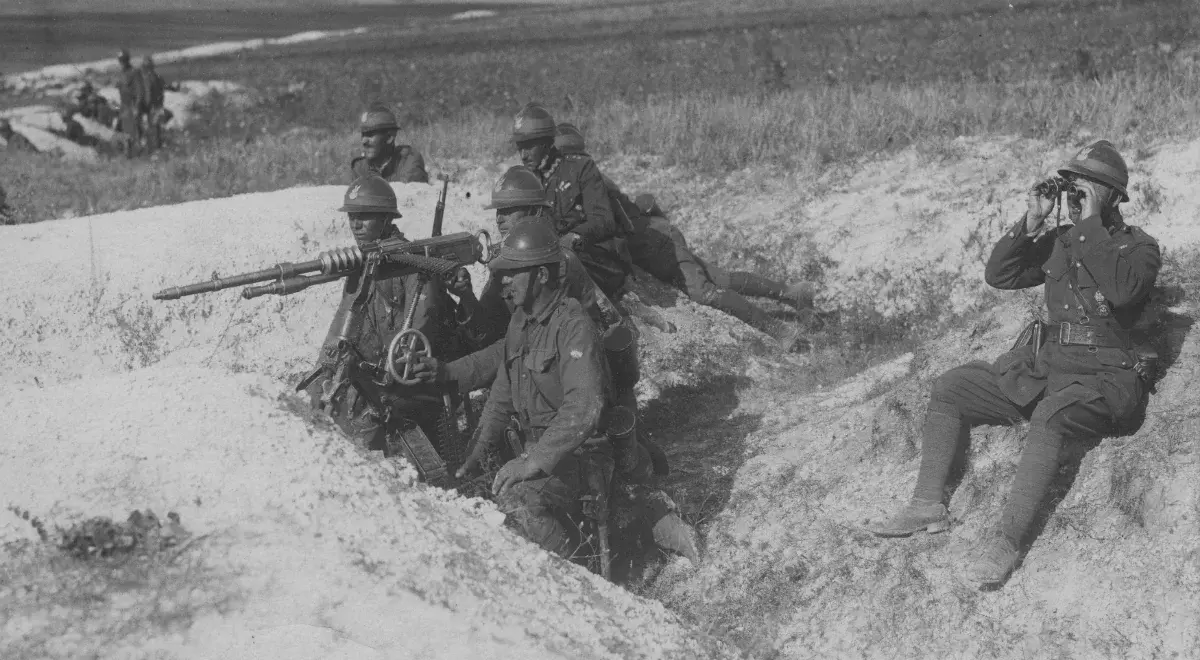
Around the newly built Polish port of Gdynia, fighting continued long after Westerplatte surrendered. Polish troops under Colonel Stanisław Dąbek defended the approaches to the city and, after being forced back, concentrated on a small plateau overlooking the Baltic known as Kępa Oksywska.
- Find more news from Poland on our Homepage .
By the time organised resistance there ended on 19 September, the Land Coastal Defence under Dąbek had been fighting for nineteen days and had taken part in at least 110 separate engagements, according to Poland’s Institute of National Remembrance.
It was one of the most intense battles fought on Poland’s coast in September 1939 — yet it remains overshadowed internationally by Westerplatte.
Gdynia: a port Poland had built from almost nothing
Gdynia was more than another city to defend.
After Poland regained independence in 1918, access to the Baltic became an economic and strategic priority. During the 1920s and 1930s, what had been a relatively small settlement developed into a modern port city and one of the most striking symbols of the new Polish state.
Nearby Oksywie became the main base of the Polish Navy. The area contained the fleet headquarters, barracks, workshops, military warehouses, coastal batteries and anti-aircraft positions.
Defending Gdynia and the surrounding coast fell largely to the Land Coastal Defence commanded by Colonel Stanisław Dąbek.
The Polish forces faced a stronger German opponent with superiority in aircraft, artillery and naval support.
During the opening days of the war, positions around Kępa Oksywska were attacked from the air and shelled from the Baltic, including by the Schleswig-Holstein. A major German ground offensive against the coastal defence began on 10 September.
Retreat from Gdynia to Oksywie
As German pressure increased, Dąbek’s troops were gradually forced into a smaller defensive area.
Fighting north and west of Gdynia was severe. On 12 September, for example, Polish and German forces repeatedly contested the village of Kazimierz; according to an IPN biography of Dąbek, it changed hands numerous times during the day. Polish counterattacks followed, but the defenders lacked the strength to restore the original line.
German forces entered Gdynia on 14 September.
The Polish units withdrew towards Kępa Oksywska — a raised area between Gdynia, the sea and the surrounding lowlands. The position offered some defensive advantages, but it also left the remaining troops increasingly compressed into a small area with little prospect of reinforcement or escape.
Conditions deteriorated quickly.
The defenders were short of artillery and basic equipment. Communications between units were difficult, often depending on runners and vulnerable telephone lines. German artillery fire caused fires across the battlefield, while casualties steadily reduced the number of men available to hold the shrinking perimeter.
The battle was no longer about saving Gdynia. It had become an attempt to continue organised resistance for as long as possible.
The final fighting on 19 September
German attacks intensified on 17 and 18 September.
By the morning of 19 September, Polish positions were fragmented and the remaining forces were exhausted. German troops broke through parts of the defence, including around Babi Dół.
Organised resistance on Kępa Oksywska collapsed that day. Dąbek, who had commanded the Land Coastal Defence throughout the campaign, died by suicide rather than surrender to German forces. Contemporary Polish remembrance has often emphasised his determination not to enter captivity, although that final decision should be understood as part of the desperate military situation facing the defenders rather than turned into romantic legend.
The fighting had been exceptionally costly for such a confined battlefield.
Historical estimates cited by Dzieje.pl place Polish military deaths during the defence at roughly 1,500 to 2,000, with another 3,000 to 3,500 wounded. As with many figures from the September Campaign, these should be treated as historical estimates rather than exact totals.
The fall of Kępa Oksywska did not end resistance everywhere on the Polish coast. The fortified Hel Peninsula continued fighting until 2 October.
Why Kępa Oksywska is less well known than Westerplatte
Westerplatte occupies a special place in the history of September 1939 because the German attack there became one of the opening actions of the war and its small garrison held out for seven days against overwhelming forces.
That powerful, easily understood story travelled well beyond Poland.
The fighting around Gdynia and Kępa Oksywska was different. It involved a broader front, multiple units, withdrawals, counterattacks and a battle that gradually contracted around Oksywie. There is no single moment comparable to the opening bombardment of Westerplatte.
Yet in military terms, the story was substantial.
IPN historians note that the Land Coastal Defence fought at least 110 engagements during nineteen days of combat, an extraordinary concentration of fighting in a relatively small area.
Its significance also extends beyond the battlefield.
Gdynia had been one of interwar Poland’s most ambitious national projects: a modern city and port built to strengthen the country’s connection with the Baltic. The battle fought around it in September 1939 was therefore a defence not only of military positions, but of a place closely associated with Poland’s return to the sea after more than a century of partitions.
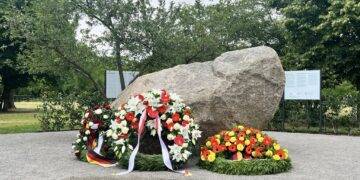
Today, cemeteries, memorials and surviving military sites around Gdynia and Oksywie preserve that history.
Westerplatte remains the better-known symbol. But to understand the full scale of Poland’s defence of its Baltic coast in September 1939, the battle of Kępa Oksywska belongs alongside it.