

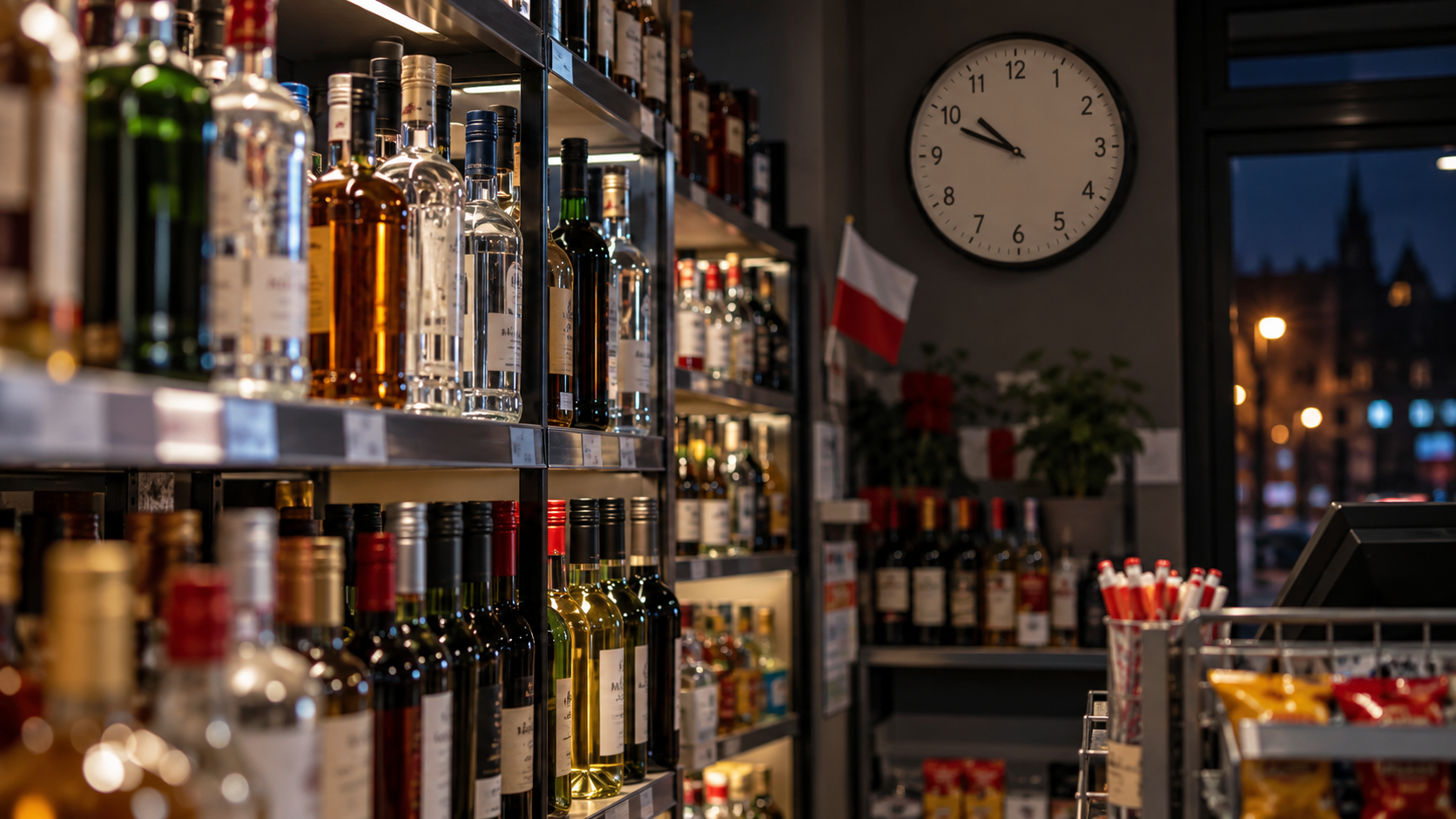
Poland’s Sejm has overwhelmingly approved legislation introducing a nationwide ban on takeaway alcohol sales between 10 p.m. and 6 a.m., alongside sweeping restrictions on alcohol advertising, promotions and sales. The measure was backed by 400 MPs, with nine voting against and four abstaining, but it is not yet law: it must still pass through the Senate and presidential stage before the planned changes can take effect.
The legislation, adopted on Thursday evening, would establish a common overnight sales restriction across the country from 22:00 until 06:00. The ban would apply to alcohol bought for consumption away from the place of sale — principally shops and petrol stations — rather than drinks served in restaurants, bars and pubs. Hotels and airports are also among the exemptions described in the legislation.
The reform would therefore take a system already used by numerous Polish municipalities and turn it into a national baseline. Warsaw introduced its own 10 p.m.–6 a.m. restriction across the entire city in June 2026, while similar measures already operate in cities including Kraków and Gdańsk.
- Find more news from Poland on our Homepage .
Local authorities would retain some ability to go further. Under the legislation approved by the Sejm, municipal councils could additionally restrict takeaway alcohol sales between 9 p.m. and 10 p.m. or between 6 a.m. and 9 a.m., allowing stricter local rules around the national overnight ban.
Advertising and promotions face major restrictions
The bill goes considerably further than overnight sales.
It would introduce a general prohibition on the advertising and promotion of alcoholic drinks, including beer, ending the exemption that currently permits beer advertising under specified conditions. Breaching the new restrictions could carry a fine of between PLN 30,000 and PLN 1 million, or a restriction of liberty.
The legislation is also designed to end retail promotions encouraging customers to buy larger quantities of alcohol, such as multi-buy offers of the “six plus six free” type. During the parliamentary debate, supporters argued that such promotions encourage impulsive purchases and contribute to the normalisation of alcohol as an ordinary consumer product.
However, MPs accepted amendments intended to protect parts of Poland’s growing wine industry.
The final Sejm version distinguishes conventional alcohol promotion from certain information about wine culture and enogastronomic events. Festivals, fairs, wine harvest celebrations and tastings can continue under specified conditions, provided material does not cross into prohibited commercial advertising.
Those amendments followed concerns from politicians representing the Polish People’s Party, PSL, that an overly broad definition of promotion could damage small Polish vineyards and wine tourism.
Online wine sales given legal route
Another amendment accepted by MPs creates a regulated route for selling wine online.
Businesses holding the necessary alcohol licence would be able to accept an order remotely, but the buyer would have to collect the alcohol from an authorised sales point, where their identity and age would be checked. It therefore does not amount to unrestricted home delivery of alcohol ordered online.
Age verification will also become stricter in conventional shops. At present, sellers may ask for identification when uncertain whether a customer is 18. Under the new provisions, they would be required to verify age where there is doubt and refuse the transaction if the customer fails to provide identification.
Small alcohol containers of up to 300 ml would meanwhile have to be made from glass or metal and carry health and safety warnings, including messages relating to alcohol consumption during pregnancy, drink-driving and alcohol use by minors.
The cost of alcohol-sales licences would also double under the legislation. Polsat News reports that the fee for drinks containing up to 18% alcohol would rise from PLN 525 to PLN 1,050, while the fee applying to stronger alcohol would increase from PLN 2,100 to PLN 4,200.
Sejm support was overwhelming
The final vote was unusually decisive. Of the MPs taking part, 400 supported the bill, nine opposed it and four abstained. MPs considered 37 amendments during the final parliamentary stage, accepting some of them before approving the legislation as a whole.
The legislation grew out of proposals submitted by MPs from the Left and Poland 2050 and subsequently combined during work in the Sejm Health Committee. The committee used the Left-backed proposal as the principal text while incorporating provisions from both initiatives.
The national night-sales restriction has been one of the most politically visible elements of the package. During September’s parliamentary debate, the committee’s rapporteur said the intention was to introduce a uniform national restriction from 10 p.m. to 6 a.m. while excluding the hospitality sector.
Supporters have pointed to experience in municipalities that already restrict overnight alcohol sales, arguing that local bans have been accompanied by reductions in police and municipal-guard interventions. Critics, meanwhile, have questioned whether a nationwide restriction is proportionate and argued that municipalities should have greater freedom to decide their own rules.
It is not law yet
Despite headlines describing a nationwide “night prohibition”, nothing changes for consumers immediately.
You May Also Be Interested In
Thursday’s vote completes the legislation’s passage through the Sejm, Poland’s lower house of parliament. The bill now goes to the Senate, which can approve it, amend it or reject it. It must subsequently complete the remaining constitutional process, including consideration by the president, before it can become binding law.
The legislation currently provides for the main changes to take effect on 1 January 2027. That date therefore remains conditional on the bill successfully completing the remaining legislative stages.
If enacted in its current form, the legislation would represent one of the broadest changes to Poland’s alcohol rules in years: introducing a nationwide overnight retail ban while simultaneously tightening advertising, promotions, age checks, packaging rules and licensing.