

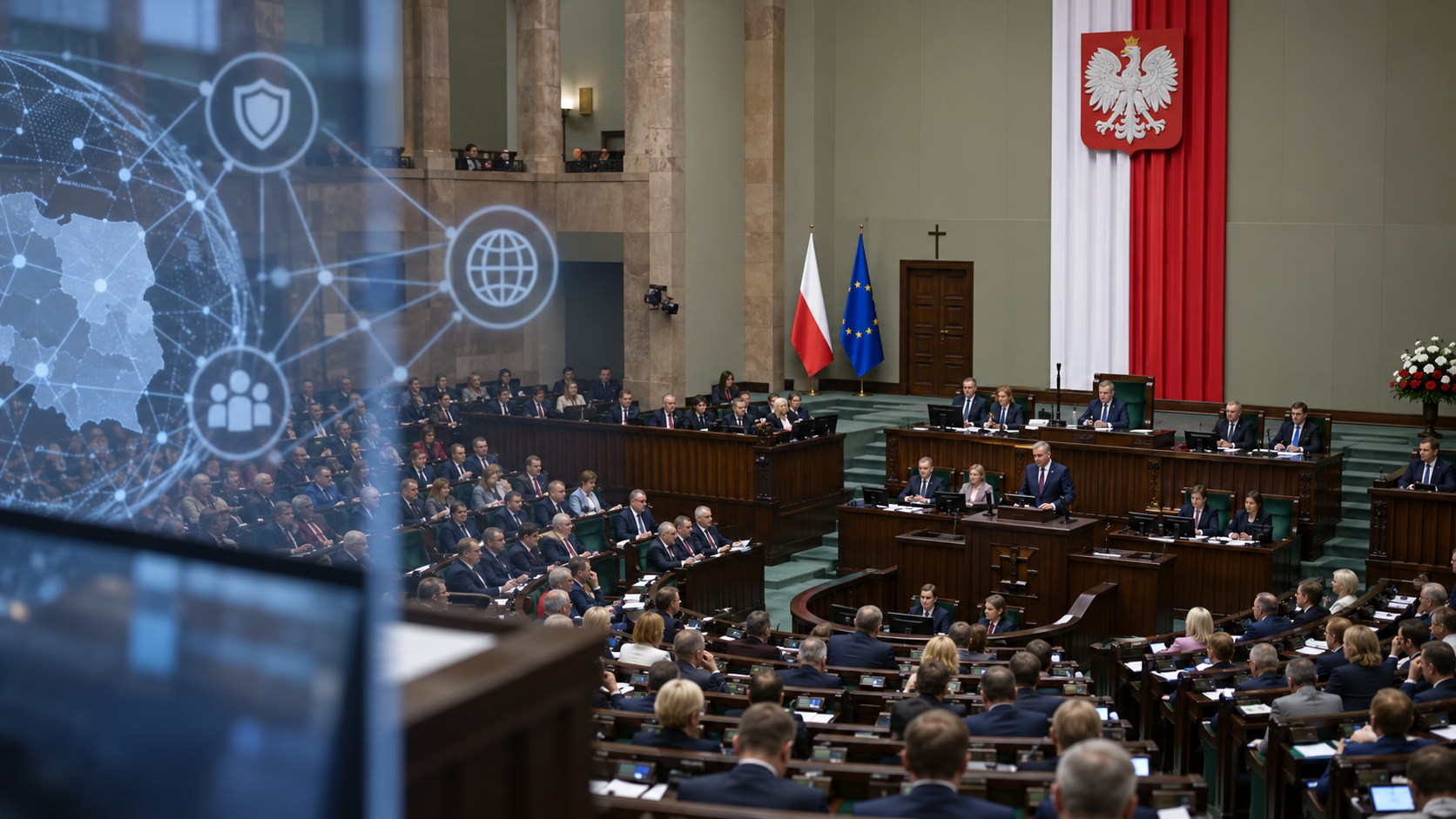
Poland’s lower house of parliament has approved legislation that would allow regulators and courts to order restrictions on access to unlawful online content, after two serious school attacks intensified government pressure for faster action against violent and illegal material online. The bill passed the Sejm by 242 votes to 61, with 136 abstentions, but is not yet law and will now move to the Senate.
The legislation amends Poland’s law on electronic services and forms the second part of a redesigned national framework for applying the European Union’s Digital Services Act, or DSA. The first part — establishing the institutional system for DSA enforcement and making the president of the Office of Electronic Communications, UKE, Poland’s Digital Services Coordinator — was signed by President Karol Nawrocki on 25 September and is due to enter into force on 6 November.
Thursday’s bill deals more directly with orders restricting access to illegal content.
- Find more news from Poland on our Homepage .
Under the framework developed by the Digital Affairs Ministry, relevant authorities would be able to issue orders requiring internet-service providers and online platforms to restrict access to material that violates Polish law. The system covers categories including content connected to criminal offences, fraud, identity theft, child sexual exploitation and certain intellectual-property violations.
The government says the legislation is intended to create a faster procedure than relying solely on platforms’ own moderation systems.
Who could seek content blocking?
The Digital Affairs Ministry says prosecutors, police, the National Revenue Administration and Border Guard would be among the public authorities able to apply for rapid restrictions on unlawful content.
Decisions would be handled through the competent authorities under Poland’s DSA enforcement structure. UKE is the principal national Digital Services Coordinator, while the chairman of the National Broadcasting Council, KRRiT, has responsibilities in areas including video-sharing platforms. Courts can also issue orders concerning illegal online material.
The bill also provides for a register of websites used to distribute illegal content, to be maintained by the president of UKE.
Importantly, the system is not designed to allow every disputed post or opinion to be removed instantly by an administrative decision.
Users whose content has been restricted would have legal avenues to challenge the decision, while platforms and users would participate in the procedure. Decisions ordering restrictions can be challenged before a common court, which would determine whether the material actually violates the law.
The legislation also generally requires users to first use the platform’s own reporting mechanism before applying to the competent authority for restoration of access where they believe content has been wrongly restricted.
Sejm changes immediate-blocking rules
MPs considered a series of amendments before approving the bill.
One amendment backed by Law and Justice and Poland 2050 was adopted, modifying the rules under which a blocking decision can be given immediate enforceability. The final Sejm version allows that accelerated treatment for certain particularly serious categories of unlawful pornographic material, including content involving minors, animals or material of a particularly drastic nature.
Other proposed amendments from Confederation and one from Law and Justice were rejected.
The distinction matters because the legislation has been at the centre of a broader argument over whether administrative authorities should be able to restrict online material before a court has finally ruled on its legality.
Vote accelerated after school attacks
The bill itself was not written in response to this week’s violence. The government approved the two-part replacement DSA framework in June, and the content-blocking proposal had already completed its second reading in the Sejm in early September.
What changed this week was the timing.
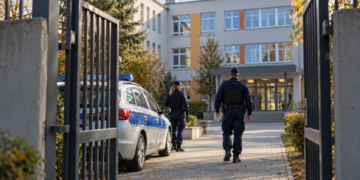
The bill had been awaiting further parliamentary action without a scheduled final vote. After attacks at schools in Ostrołęka and Leszczydół-Nowiny, the Digital Affairs Ministry asked for it to be added to Thursday’s voting agenda.
Prime Minister Donald Tusk had earlier called for stronger tools to respond rapidly to violent and hateful material online as the government discussed possible imitation behaviour following the attacks.
In one of the incidents, authorities said the teenage suspect had been wearing a helmet-mounted camera and may have intended to record the attack. That discovery contributed to discussion about how violent incidents can be recorded, circulated and imitated online.
You May Also Be Interested In


However, authorities have not established that the two school attacks were coordinated or caused by an online challenge, and the legislation should not be presented as evidence that such a connection exists.
Deputy Digital Affairs Minister Dariusz Standerski said the law would give users a mechanism for reporting illegal material and authorities a mechanism for issuing blocking orders. He cited criminal offences including murder-related incitement, encouraging suicide and illegal pornographic content as examples of material the state needs to be able to address rapidly.
Second attempt after presidential veto
The political background is important because Poland has already tried once to establish a broader DSA enforcement system.
President Nawrocki vetoed an earlier, combined DSA implementation law in January. He argued that it gave officials subordinate to the government excessive control over online content and said freedom-of-expression restrictions should be subject to independent judicial control.
The government subsequently split the replacement framework into two bills.
The first deals primarily with the institutional structure of DSA enforcement. It designates the president of UKE as Digital Services Coordinator, establishes regulatory and complaint mechanisms and allocates responsibilities between UKE, KRRiT and UOKiK. That legislation has already completed the parliamentary process and was signed by Nawrocki last month.
The second — approved by the Sejm on Thursday — deals with the more politically sensitive question of restricting access to unlawful material.
The government says splitting the legislation and adding judicial appeal mechanisms answers concerns raised about the earlier version. Whether the revised safeguards are sufficient will remain politically significant when the bill eventually reaches the president.
What happens next
Thursday’s vote does not give Polish authorities new blocking powers immediately.
The bill must now be considered by the Senate, which can approve it, amend it or reject it. It would then return through the remaining constitutional process before being sent to the president.
The government’s framework envisages the content-blocking legislation entering into force three months after publication in the Journal of Laws, but that timetable can begin only if the bill successfully completes the remaining stages.
Meanwhile, the separately enacted DSA institutional law will enter into force on 6 November, meaning Poland’s regulator will begin operating under its new formal role even while parliament continues debating the companion blocking regime.
The result is that Poland is moving closer to a full national DSA enforcement system, but the most sensitive part — giving state authorities a defined procedure for restricting illegal material online — remains unfinished legislation.