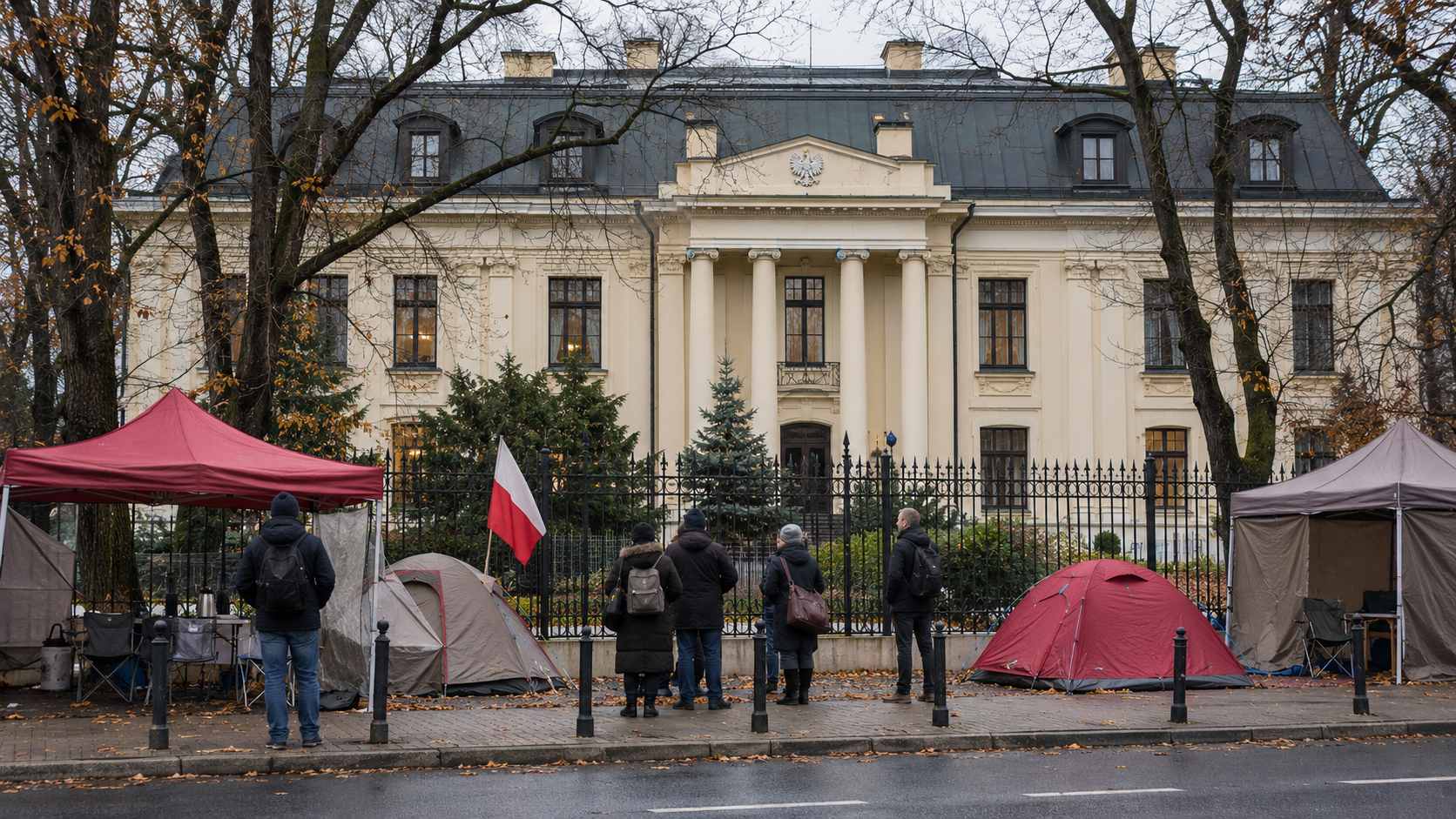
A Warsaw court has overturned a decision by the city’s authorities to prevent protesters from continuing demonstrations outside Poland’s Constitutional Tribunal, ruling that the restrictions were not sufficiently justified. However, Warsaw Mayor Rafał Trzaskowski has announced that the city will challenge the decision.
The Warsaw Regional Court ruled on Thursday evening, 26 November, in favour of organisers who had appealed against the city’s refusal to allow an extended demonstration outside the tribunal’s headquarters on Szucha Avenue.
The ruling clears the way for the protest to continue beyond the end of November, although its longer-term future remains uncertain because of the planned appeal.
- Find more news from Poland on our Homepage .
The demonstration, which has continued for several weeks, is supported by groups associated with the conservative opposition Law and Justice (PiS) party.
Participants oppose changes to the Constitutional Tribunal’s leadership and composition, which they characterise as an attempt by Prime Minister Donald Tusk’s government to take control of the institution.
Court rejects city’s justification for restrictions
The dispute began when Warsaw’s municipal authorities refused to allow a further demonstration planned to run from 30 November 2026 until 5 January 2027.
Organisers submitted their notification on 10 November.
The city argued that the notification had been submitted too early for a demonstration extending into January.
Under Poland’s Law on Assemblies, notifications must generally reach municipal authorities between six and 30 days before a planned assembly.
However, Judge Anna Izabela Bonkowska-Kubek rejected the city’s interpretation.
According to Radio dla Ciebie’s account of the court proceedings, the judge determined that the statutory notification period should be assessed by reference to the demonstration’s starting date.
The organisers had complied with that requirement.
The court also rejected the city’s broader justification for preventing the demonstration from continuing.
Warsaw authorities had raised concerns about road closures, complaints from nearby residents and potential difficulties for emergency services.
The court found that the evidence presented did not adequately establish the serious threats to public safety required to justify prohibiting the assembly.
Judge Bonkowska-Kubek emphasised that restrictions preventing peaceful demonstrations should be exceptional.
She also indicated that authorities must consider less restrictive measures that would allow an assembly to proceed lawfully.
The ruling concerned the legality of the municipal restrictions, rather than the political arguments advanced by the demonstrators.
Trzaskowski announces appeal
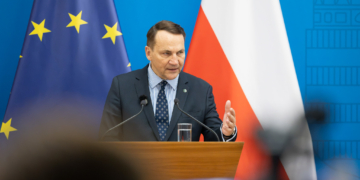
On Friday, 27 November, Warsaw Mayor Rafał Trzaskowski confirmed that the city intended to challenge the ruling.
In a statement published on X and reported by Polish Radio, Trzaskowski said he respected the court’s decision but would exercise the city’s right to appeal.
He argued that the dispute concerned the interests of local residents and the ability of emergency vehicles to travel along Szucha Avenue.
The mayor distinguished between the right to demonstrate and the prolonged occupation of a public road.
Trzaskowski, a senior figure in Prime Minister Tusk’s Civic Coalition (KO), has maintained that the city is responsible for balancing freedom of assembly with public safety.
The municipal authorities have pointed to the impact of the protest camp on traffic and access to surrounding streets.
Under the applicable procedure, the city can challenge the Regional Court’s decision before the Warsaw Court of Appeal.
As of Friday’s reporting, Trzaskowski had announced his intention to appeal. A subsequent appellate ruling had not been established.
Kaczyński announces another demonstration
Meanwhile, PiS leader Jarosław Kaczyński welcomed the court’s decision.
In a statement reported by Polish Radio’s English service, Kaczyński described the municipal decision as unlawful and presented the court’s intervention as a victory for the protesters.
He also announced another demonstration outside the Constitutional Tribunal.
The gathering is scheduled for Sunday, 29 November, at 3pm Polish time.
The protest camp outside the tribunal was established in September by groups opposing changes to the institution’s leadership.
Participants include supporters of PiS and organisations associated with the Gazeta Polska Clubs.
The demonstration has become one of the most visible expressions of opposition to the government’s approach to the Constitutional Tribunal.
Latest development in Poland’s constitutional dispute
The court’s decision comes amid a wider institutional conflict over the leadership and functioning of Poland’s Constitutional Tribunal.
The tribunal has been at the centre of disputes over judicial appointments, institutional legitimacy and the authority to administer constitutional justice.
On Thursday, a separate disciplinary panel announced a 12-month suspension of Constitutional Tribunal president Bogdan Święczkowski.
Święczkowski disputes the panel’s authority and the validity of its decision.
That development followed earlier disputes concerning judges appointed to the tribunal and competing claims over its leadership.
The demonstrations on Szucha Avenue form part of the political response to those developments.
However, Thursday’s Regional Court ruling addressed a distinct legal question: whether Warsaw’s municipal authorities had sufficient grounds to restrict a public assembly.
The decision does not determine which side is legally correct in the wider Constitutional Tribunal dispute.
Instead, it concerns the constitutional right to peaceful assembly and the circumstances in which municipal authorities can lawfully restrict that right.
The next stage will depend on the city’s planned appeal and any subsequent decision by the appellate court.
For now, the organisers have secured a ruling allowing the demonstration to continue, while Warsaw’s authorities maintain that prolonged disruption to public roads requires further judicial consideration.