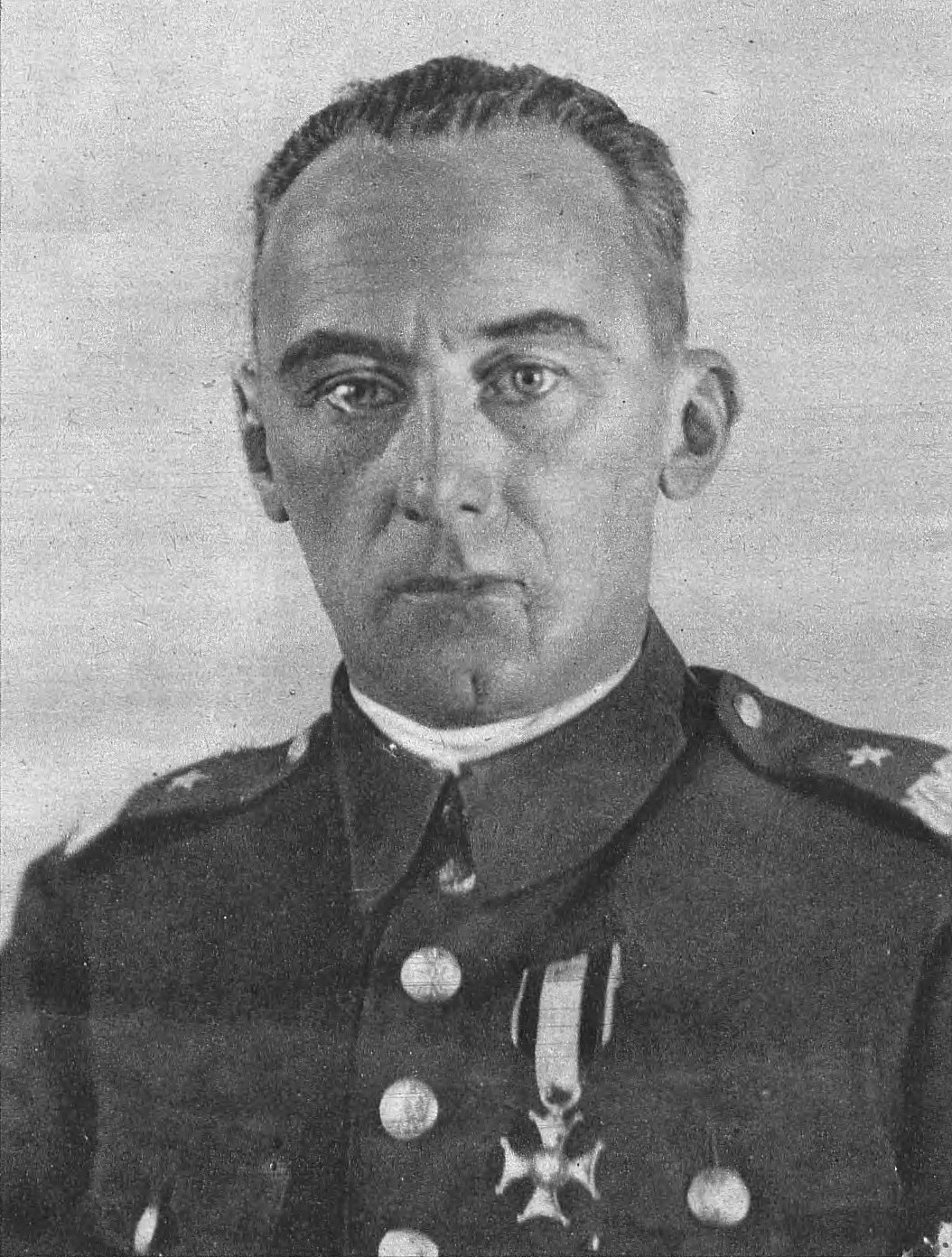
On 21 November 1966, General Władysław Bortnowski died in Glen Cove, New York, more than 27 years after commanding Polish forces during Nazi Germany’s invasion of his homeland.
He had led Army “Pomorze” in September 1939, fighting in the opening days of the Second World War and later participating in the Battle of the Bzura, the largest Polish counteroffensive of the campaign.
Captured by German forces, he spent the remainder of the war in prisoner-of-war camps. After liberation, he remained abroad, becoming involved in Polish émigré organisations in Britain and the United States.
- Find more news from Poland on our Homepage .
His life reflected the experiences of a generation of Polish military officers whose careers began in the struggle for national independence but ended far from the country they had served.
The 60th anniversary of his death provides an opportunity to examine both his achievements and the controversial decisions he made during Poland’s military defeat in 1939.
From the Polish Legions to senior command
Władysław Bortnowski was born on 12 November 1891 in Radom, then part of the Russian Empire following the nineteenth-century partitions of Poland.
He studied medicine before becoming involved in Polish independence organisations.
In August 1914, shortly after the outbreak of the First World War, he joined the Polish Legions associated with Józef Piłsudski.
He served in the First Brigade and was seriously wounded during the Battle of Łowczówek in December 1914.
When Poland regained independence in 1918, Bortnowski entered the newly established Polish Army.
He subsequently participated in the Polish-Soviet War of 1919–1921, holding operational and staff positions.
After the conflict, he studied at the French military staff college in Paris, an institution attended by several prominent Polish officers of the interwar period.
He went on to occupy senior staff and command appointments in the army of the Second Polish Republic.
His career also included a politically contentious episode.
In October 1938, Bortnowski commanded the Polish operational group that entered Zaolzie, a disputed region of Cieszyn Silesia then belonging to Czechoslovakia.
Polish forces occupied the territory following an ultimatum issued by Warsaw during the crisis surrounding the Munich Agreement.
The episode remains part of the disputed history of Polish-Czechoslovak relations.
In March 1939, as tensions with Nazi Germany intensified, Bortnowski was promoted to the rank of major general and appointed commander of Army “Pomorze”.
The responsibility would define his historical reputation.
Defending Poland’s vulnerable northern frontier
Army “Pomorze”, named after the Polish word for Pomerania, was assigned to defend parts of northern Poland, including the strategically vulnerable territory connecting the country to the Baltic Sea.

Known internationally as the Polish Corridor, the region lay between Germany and East Prussia, which was then separated from the rest of German territory.
The geography presented formidable military difficulties.
When Nazi Germany invaded Poland on 1 September 1939, Bortnowski’s formations faced attacks from several directions.
German forces possessed substantial advantages in armour, air power and operational mobility.
Within the first days of the invasion, Polish formations suffered heavy losses in the Tuchola Forest region.
The defeat disrupted Bortnowski’s original defensive arrangements and forced surviving units to retreat south-east towards the interior.
His army’s difficulties reflected wider weaknesses in Poland’s defensive deployment, including the decision to maintain forward positions close to the country’s borders.
That strategy left several Polish formations vulnerable to encirclement when German forces advanced rapidly.
Nevertheless, elements of Army “Pomorze” remained capable of fighting.
As they withdrew towards central Poland, they joined forces with Army “Poznań”, commanded by General Tadeusz Kutrzeba.
Together, the two armies would undertake the most significant Polish offensive of the September Campaign.
The Battle of the Bzura and disputed decisions
On 9 September 1939, Polish forces launched a counterattack against the exposed flank of Germany’s Eighth Army along the Bzura River, west of Warsaw.
Kutrzeba directed the overall operation, with Bortnowski placing his remaining formations under Kutrzeba’s operational leadership.
The initial Polish attack achieved notable successes.
German units were surprised, Polish troops advanced and several localities were recaptured.
For a brief period, the operation forced the German command to divert substantial forces from its advance towards Warsaw.
However, the battle also exposed the difficulties of coordinating large Polish formations while communications and supply lines were deteriorating.
Bortnowski’s conduct became one of the most debated aspects of the campaign.
On 14 September, after receiving reports that German armoured units were approaching the battlefield near Sochaczew, he ordered an attack towards Skierniewice to be halted and his forces to withdraw towards the Bzura.
The Polish Army Museum identifies the decision as a significant interruption to an offensive that had initially been progressing successfully.
Military historians have criticised Bortnowski for reacting too quickly to the reported German threat.
Professor Paweł Wieczorkiewicz was particularly severe in his assessment, arguing that Bortnowski’s leadership contributed to the defeat of Army “Pomorze” in the opening battles and undermined the later counteroffensive.
Such assessments remain interpretations of his military performance rather than evidence that he alone was responsible for the outcome.
Polish commanders were confronting a German army with overwhelming advantages in air support, armour and freedom of movement.
By 16 September, German forces had concentrated substantial reinforcements against the Polish formations fighting around the Bzura.
The battle continued as Polish units attempted to break through towards Warsaw and the nearby Kampinos Forest.
Some succeeded in reaching Warsaw or Modlin. Many others were killed or captured.
On 21 September, Bortnowski, who had been wounded, fell into German captivity.
The fighting around the Bzura ended with the destruction of much of the participating Polish force.
Although ultimately unsuccessful, the counteroffensive had temporarily disrupted German operations and helped buy time for the defenders of Warsaw.
German captivity and a new life in exile
Bortnowski remained a German prisoner of war until April 1945.
His imprisonment included a period at Oflag VII-A Murnau, a camp in Bavaria where many senior Polish officers were held.
American forces liberated the camp on 29 April 1945.
The war’s end did not restore the independent Poland in which Bortnowski had served.
Poland emerged under communist rule, within the Soviet sphere of influence, and many members of its pre-war military and political leadership remained in exile.
Bortnowski went first to Western Europe and subsequently settled in Britain.
He helped establish the Józef Piłsudski Institute in London in 1947, becoming its first president.
The institute sought to preserve documents, research and historical traditions associated with Piłsudski and the struggle for Polish independence.
In 1954, Bortnowski emigrated to the United States.
There, he became involved in Polish veterans’ organisations and the Józef Piłsudski Institute of America in New York.
He served as president of the American institute in 1961–1962.
His later activities included lectures, correspondence and efforts to preserve the history of the Polish military and independence movement.
The institute’s archival collection contains his personal papers, correspondence with other Polish generals and political figures, material from his wartime imprisonment and documents concerning his émigré activities.
Those records illustrate how senior Polish officers continued to participate in political and historical life abroad long after losing the possibility of serving their country in its pre-war form.
A general remembered on both sides of the Atlantic
Bortnowski died on 21 November 1966 in Glen Cove on Long Island, New York, aged 75.
He was buried at the cemetery of the National Shrine of Our Lady of Częstochowa in Doylestown, Pennsylvania.
The sanctuary, often called the American Częstochowa, became an important centre for Polish-American religious and cultural life.
Its cemetery contains the graves of numerous Polish veterans, political exiles and other figures associated with the country’s twentieth-century history.
Bortnowski’s military reputation remains complicated.
He belonged to the generation that fought for Polish independence during the First World War and helped build the armed forces of the restored republic.
But his leadership during the September Campaign has been criticised, particularly the decisions made during the Battle of the Bzura.
His subsequent life in exile also forms an important part of his biography.
The documents preserved by Polish historical institutions in London and New York record a military officer who, after years of captivity, devoted much of his remaining life to organisations maintaining Polish historical and political traditions abroad.
Sixty years after his death, his grave in Pennsylvania and his archival legacy in New York connect the history of Poland’s 1939 defeat with the experience of its post-war diaspora.