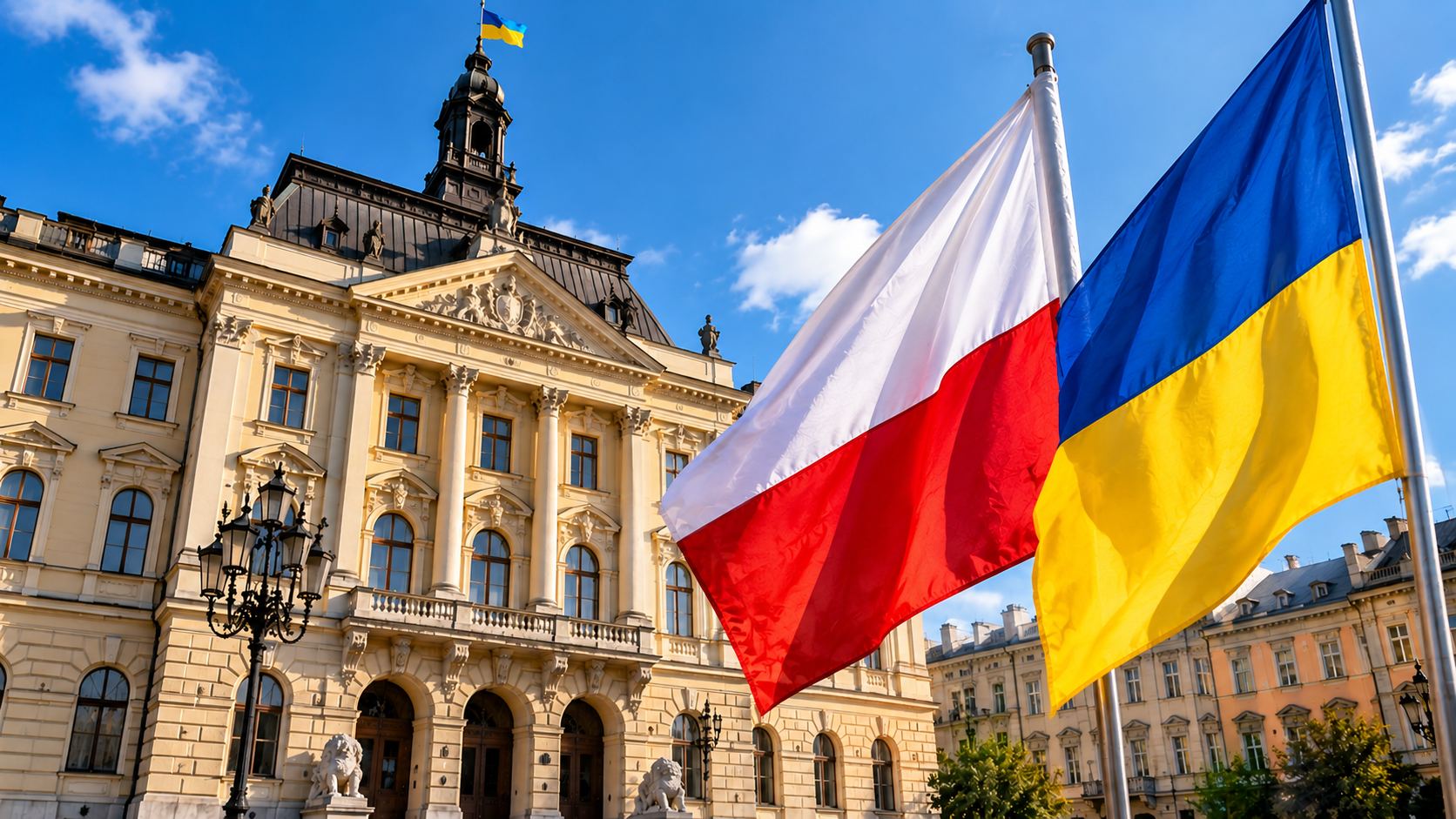
Polish Foreign Minister Radosław Sikorski has signed a request to place a Ukrainian regional councillor on Poland’s list of undesirable persons following a controversial decision to honour the Ukrainian Insurgent Army (UPA) and its wartime commander Roman Shukhevych. The move comes as Warsaw says senior aides to Ukrainian President Volodymyr Zelensky have promised that the commemorations will not proceed.
Sikorski announced the decision on Wednesday, 21 October, identifying Sviatoslav Sheremeta, chairman of the Lviv Regional Council’s culture committee, as the person targeted by the request.
Sheremeta was responsible for proposals to designate 2027 as a commemorative year for the UPA, Shukhevych and Ukrainian nationalist activist Oleh Olzhych.
- Find more news from Poland on our Homepage .
The developments follow Tuesday’s regional council vote, which prompted strong objections from Polish officials over the UPA’s responsibility for massacres of Polish civilians during the Second World War.
As Poland-24 reported in its original coverage, the decision was condemned by Poland’s defence minister, Foreign Ministry, embassy in Kyiv and Institute of National Remembrance.
Sikorski’s latest announcement represents a further escalation, although the proposed entry restriction has not yet been confirmed as formally implemented.
Sikorski signs request to blacklist Ukrainian councillor
In a statement published on X, Sikorski confirmed that he had signed a request to add Sheremeta to Poland’s list of undesirable persons.
The foreign minister identified Sheremeta as the initiator of plans to commemorate Shukhevych, who commanded the UPA during the period when its forces carried out systematic killings of Polish civilians.
Sikorski also described Sheremeta as a participant in historical re-enactments involving the Galizien Waffen-SS division, a formation established under Nazi Germany with predominantly Ukrainian personnel.
The characterisation concerning Sheremeta’s involvement in such re-enactments is the foreign minister’s allegation and has not been independently established for this report.
The Lviv Regional Council’s official agenda identifies Sheremeta as the presenter of the three commemorative proposals.
His involvement is therefore documented independently of Sikorski’s statement.
The Polish minister did not announce how long any future entry restriction might last or whether the administrative procedure had been completed.
Signing a request for inclusion on the list is not the same as confirming that an entry ban is already in force.
Sheremeta was previously barred from entering Poland
This is not the first time Sheremeta has faced Polish entry restrictions.
In November 2017, Polish authorities refused him entry at the Medyka border crossing during a diplomatic dispute over the commemoration and exhumation of Polish victims buried in Ukraine.
At the time, Sheremeta served as secretary of a Ukrainian government commission responsible for commemorating victims of war and political repression.
The Polish Press Agency reported that Poland’s Foreign Ministry had confirmed the entry ban.
Ukrainian reporting indicated that the restriction was imposed for one year.
The dispute arose amid tensions over Ukrainian restrictions on Polish searches and exhumations at historical burial sites.
Sheremeta disputed accusations that his activities were directed against Poland.
The 2017 restriction was a separate administrative action and does not establish that a new ban has already taken effect.
Zelensky’s aides reportedly promise commemorations will not proceed
Sikorski’s announcement came hours after Deputy Foreign Minister Marcin Bosacki revealed that Warsaw had received assurances from senior Ukrainian officials concerning the Lviv resolutions.
Speaking on Wednesday morning, Bosacki said associates of President Zelensky had promised that the commemorations would not go ahead.
According to reporting by the Polish Press Agency, Bosacki said Poland expected the Ukrainian president’s office to honour that commitment.
He also pointed to the disappearance of the original announcement from the Lviv Regional Council’s website late on Tuesday evening.
The announcement was no longer accessible at its previously published address on Wednesday, although the council’s agenda and draft-resolution records remained available.
Bosacki regarded the removal as an encouraging development.
However, the Polish government’s account of assurances received from Zelensky’s advisers has not been accompanied by a publicly confirmed decision formally rescinding the regional resolutions.
The Ukrainian president’s office has not been independently verified as issuing a new public declaration cancelling the commemorations.
Donald Tusk says decision harms Ukraine
Prime Minister Donald Tusk also criticised the Lviv decision on Wednesday, warning that such actions damage Ukraine’s interests and make cooperation with Poland more difficult.
Speaking before departing for India, Tusk described the commemorations as ill-judged.
As reported by Onet, the prime minister said he had previously warned Zelensky that gestures honouring figures associated with the wartime massacres complicated the work of those supporting closer Polish-Ukrainian relations.
Tusk stressed that Zelensky was not responsible for the regional council’s decision.
He nevertheless argued that the resulting tensions benefited Russia, which has repeatedly sought to exploit historical disagreements between Poland and Ukraine.
The prime minister also warned that disputes of this kind could provide arguments for those opposed to Ukraine’s future membership of the European Union.
Why the UPA commemorations caused outrage
The controversy began on 20 October, when the Lviv Regional Council adopted three separate resolutions designating 2027 as a year honouring the Ukrainian Insurgent Army, Roman Shukhevych and Oleh Olzhych.
The commemorations were intended to mark the 85th anniversary of the UPA’s formation and the 120th anniversaries of the births of Shukhevych and Olzhych.
The UPA was a Ukrainian nationalist armed formation established during the Second World War.
Although it is commemorated by some Ukrainians for its struggle for independence and resistance to Soviet rule, its forces also carried out mass killings of Polish civilians in Volhynia and Eastern Galicia.
The campaign, which began in 1943, involved attacks on Polish villages and settlements, killing tens of thousands of civilians.
Polish historians estimate that approximately 100,000 Poles were murdered across the affected territories, although the exact figure remains uncertain.
Polish state institutions classify the massacres as genocide.
Shukhevych became the UPA’s principal commander in 1943 and is held responsible by Polish historians and the Institute of National Remembrance for the organisation’s campaign against Polish civilians.
The historical record and the contrasting ways in which the UPA is remembered remain among the most sensitive issues in relations between Poland and Ukraine.
What happens next?
The latest developments leave two separate issues unresolved.
The first concerns Sheremeta’s legal position. Sikorski has announced that he signed a request for the councillor to be placed on Poland’s list of undesirable persons, but the completion of that process has not been confirmed.
The second concerns the future of the Lviv Regional Council’s commemorative resolutions.
Warsaw says it has received assurances that the planned celebrations will not proceed. However, the formal withdrawal or annulment of the resolutions remains unconfirmed.
The dispute comes as Poland and Ukraine are cooperating on the identification and exhumation of victims of wartime massacres, following years of disagreements over access to burial sites.
Both governments also continue to maintain close cooperation over Ukraine’s defence against Russia’s invasion.
Whether the assurances reported by Warsaw lead to a formal reversal of the regional decision will determine the next stage of the diplomatic dispute.