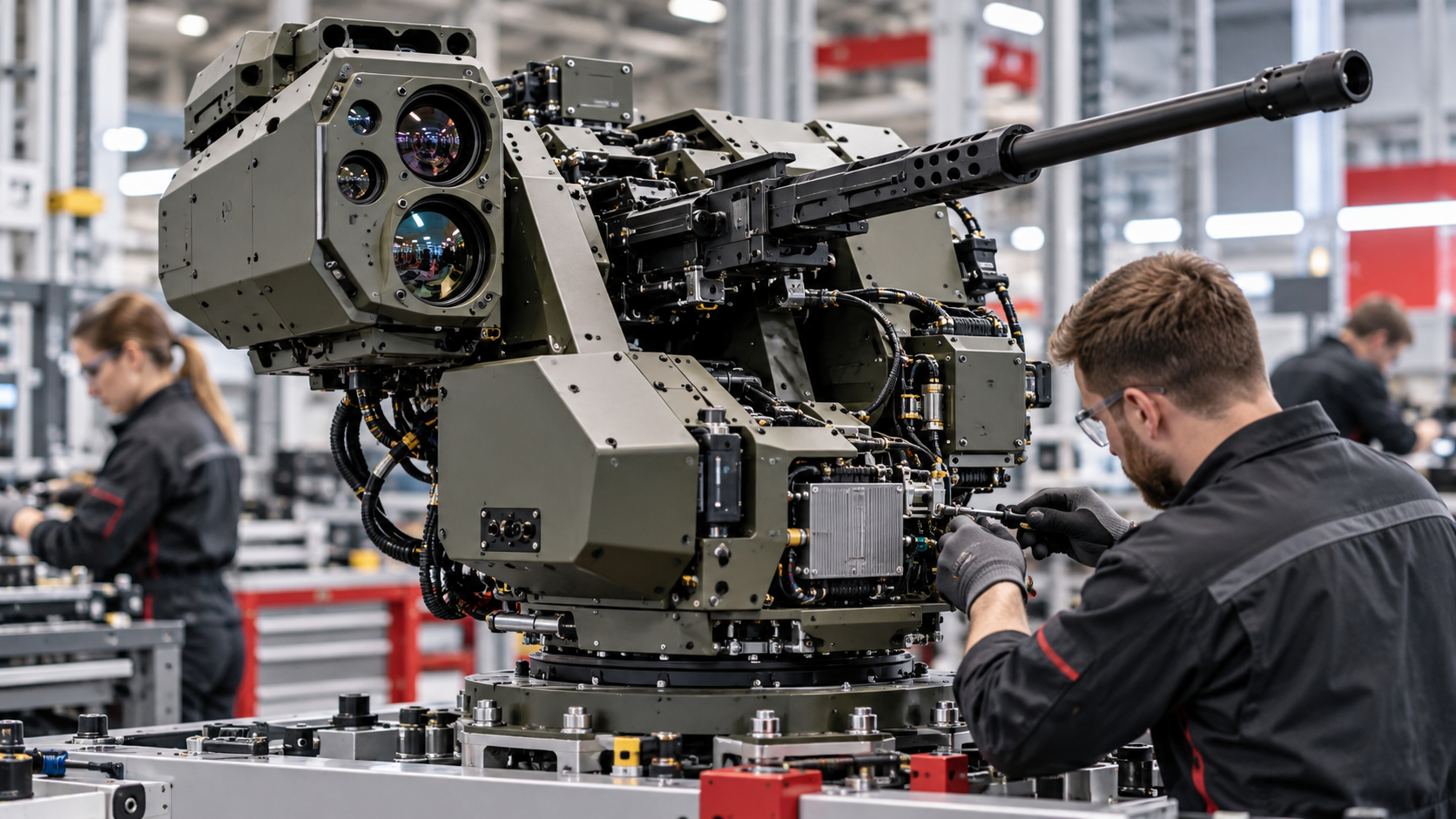
Norwegian defence company Kongsberg has announced plans to establish a new counter-drone manufacturing facility in northern Poland, investing more than PLN 200 million (€45 million) and creating over 100 permanent jobs. The factory will produce and maintain systems designed to detect and counter unmanned aircraft, supporting Poland’s efforts to strengthen its defences against aerial threats.
The investment, confirmed by Kongsberg on 13 October 2026, will be located in the Pomeranian region, close to the Tricity metropolitan area comprising Gdańsk, Gdynia and Sopot on Poland’s Baltic coast.
The company has not yet disclosed the exact location of the facility.
- Find more news from Poland on our Homepage .
Kongsberg intends to conclude a construction contract before the end of 2026, with building work expected to begin shortly afterwards. Serial production could commence during the first half of 2028.
The company says the factory will become part of its international manufacturing network, supplying both the Polish armed forces and potentially other European customers.
New factory to support Poland’s anti-drone shield
The investment is closely connected to Poland’s SAN programme, a major procurement project intended to strengthen the military’s ability to identify, track and destroy hostile drones.
In January 2026, Kongsberg Defence & Aerospace and Poland’s state-owned defence group Polska Grupa Zbrojeniowa (PGZ) signed an agreement with the Polish Armaments Agency to deliver the new counter-drone system.
The Polish Armaments Agency confirmed that the programme covers 18 anti-drone batteries, with a total contract value of approximately PLN 15 billion before VAT.
Rather than relying on a single weapon, SAN is designed to combine sensors, command systems and different types of weapons to respond to aerial threats.
According to Kongsberg’s description of the programme, the system will incorporate guns of several calibres, guided missiles and interceptor drones.
Polish company Advanced Protection Systems is also involved in the project, providing technology to integrate the detection and engagement components.
The new Pomeranian facility will expand Kongsberg’s capacity to manufacture and maintain its contributions to SAN, helping establish production capabilities in Poland rather than relying exclusively on facilities abroad.
More than 100 jobs as defence production expands
The factory is expected to create more than 100 long-term jobs once it reaches full production capacity. Kongsberg has not yet provided details about the types of positions, recruitment timetable or individual production lines.
Eirik Lie, president and chief executive of Kongsberg, said the investment would reinforce the company’s position in Poland while supporting the country’s defence industry.
He also indicated that the factory would serve future customers elsewhere in Europe, potentially making Poland a production base for counter-drone equipment destined for other NATO countries.
The announcement follows more than 15 years of Kongsberg operations in Poland, including cooperation with domestic defence manufacturers and support arrangements for the Naval Strike Missile system.
The company already works with Polish defence industry partners, including Wojskowe Zakłady Elektroniczne (WZE), where it has established missile maintenance and support capabilities.
Poland accelerates drone defences after Russian incursions
The investment comes amid growing concern about the vulnerability of European airspace to unmanned aircraft.
On 10 September 2025, numerous Russian drones entered Polish airspace, triggering a military response involving Polish and allied aircraft.
The incident prompted consultations within NATO and contributed to the alliance’s decision to launch its Eastern Sentry operation, intended to reinforce surveillance and defence along its eastern borders.

NATO’s announcement of Eastern Sentry specifically identified new technologies capable of countering drones as part of the strengthened defensive arrangements.
The Russian invasion of Ukraine has also demonstrated the growing importance of relatively inexpensive unmanned aircraft, which can be used for reconnaissance, attacks on infrastructure and strikes against military targets.
Traditional air-defence systems, particularly those reliant on costly interceptor missiles, are not always the most economical way to defeat large numbers of smaller drones.
Poland’s SAN programme is intended to provide a more flexible layer of protection using different detection and interception technologies, complementing its wider air-defence network.
Poland and Norway deepen defence cooperation
Kongsberg’s investment also coincides with closer political and military cooperation between Warsaw and Oslo.
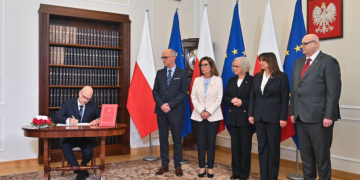
On 12 October, Polish Prime Minister Donald Tusk and Norwegian Prime Minister Jonas Gahr Støre signed a declaration on strategic partnership during talks in Warsaw.
The official declaration sets out plans to deepen cooperation in defence procurement, joint industrial production, military readiness and the protection of NATO’s northern and eastern flanks.
The declaration expresses shared political intentions rather than creating legally binding international obligations.
Both countries regard security in the Baltic Sea region as a strategic priority, particularly against the background of Russia’s continuing war against Ukraine.
For Poland, the new Kongsberg factory represents an opportunity to expand domestic defence manufacturing capacity while strengthening its industrial relationships with European allies.
For the Norwegian company, the investment offers a base from which to support Poland’s substantial counter-drone procurement programme and pursue additional European orders.
The next milestones will be the conclusion of the construction contract, confirmation of the factory’s exact location and commencement of building work.
If development proceeds according to Kongsberg’s current timetable, serial production could begin in the first six months of 2028.