

As many as one million people from Lithuania and the other Baltic states could attempt to flee towards Poland if a Russian attack triggered a mass evacuation, Lithuania’s interior minister has said, as Warsaw and Vilnius step up preparations for a possible wartime movement of civilians.
Martynas Katelynas made the assessment on Monday after meeting Polish Interior Minister Marcin Kierwiński near the Polish-Lithuanian border at Budzisko. He said the geography of the region meant Lithuania would become part of the principal overland evacuation route for people from Estonia and Latvia as well as Lithuania itself.
Katelynas said that if the security situation became serious enough to force civilians deeper into Europe, the route through the Suwałki region could have to accommodate “a million or more people”. Poland and the Baltic states therefore needed significantly closer cooperation on civil defence and evacuation planning, he said.
- Find more news from Poland on our Homepage .
The figure is a contingency-planning estimate rather than a forecast that a million people are expected to arrive in Poland. Neither Polish nor Lithuanian officials have said that a Russian attack is imminent, and the current preparations are intended to test how authorities would respond if a large-scale military crisis forced civilians westwards.
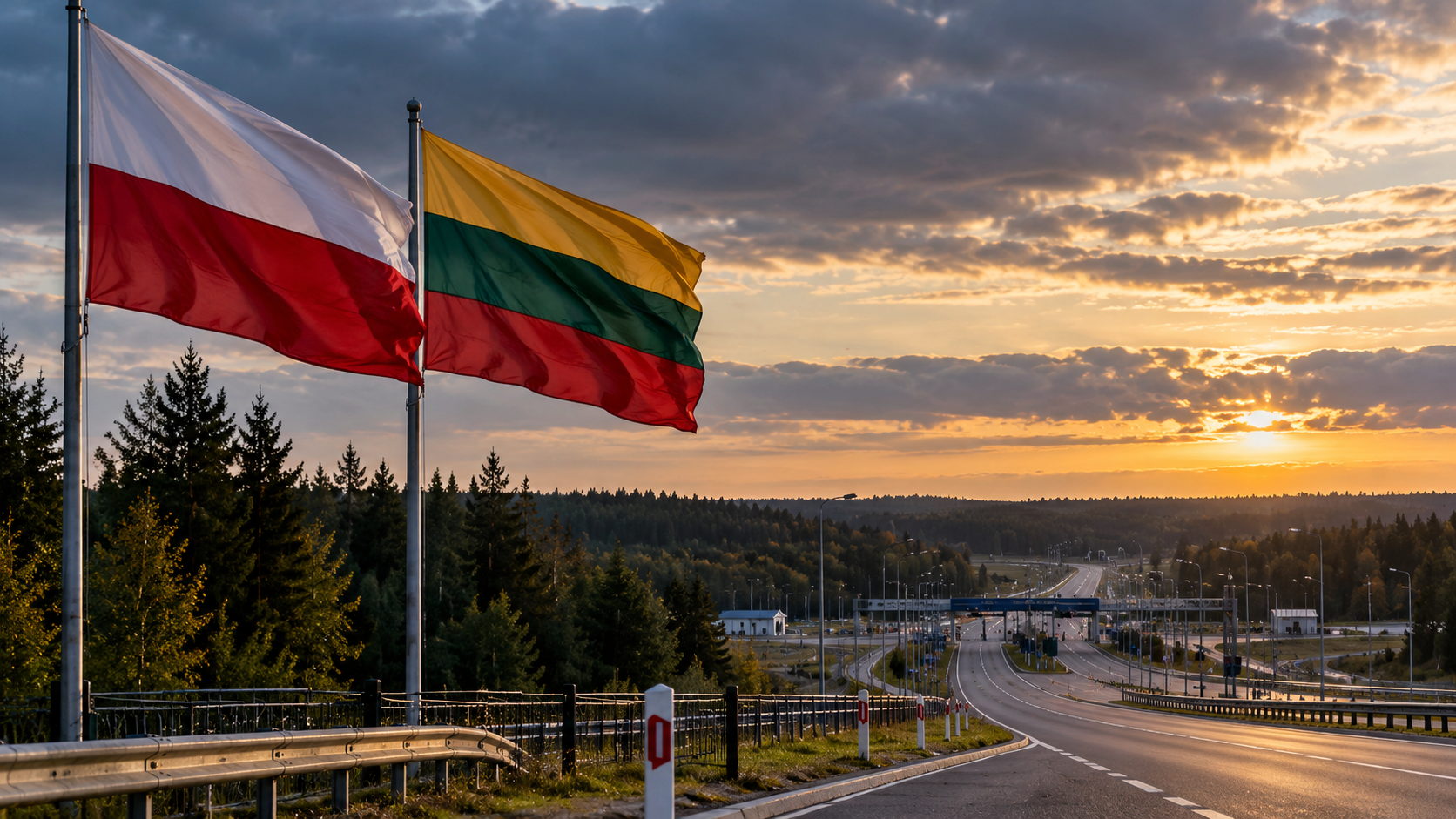
The warning nevertheless illustrates the scale of the challenge Poland could face in such a scenario. Lithuania, Latvia and Estonia are connected by land to the rest of NATO and the European Union through the narrow area linking Lithuania with north-eastern Poland, commonly known as the Suwałki Gap.
The corridor lies between Russia’s Kaliningrad region and Belarus and has long been regarded as strategically important in NATO planning. In a severe crisis, it could have to carry both civilian evacuation traffic moving south and military personnel and equipment moving towards the Baltic states.
Kierwiński said Poland’s existing national evacuation plan would need to be updated following recent Polish-Lithuanian exercises. Among the issues identified were border-crossing arrangements and preparations for the Baltic states to use Lithuania and Poland as a route towards other parts of the European Union.
The two countries have already begun what Katelynas described as intensive work on cross-border evacuation arrangements, including alternative crossings and reception infrastructure. TVP World reported that Lithuania is preparing facilities near Lazdijai, close to the Polish border, as part of those preparations.
Recent exercises have tested how such a movement could work in practice. Polish officials took part in Lithuanian civil-defence and mass-evacuation drills designed to examine border procedures, registration, transport, temporary accommodation and cooperation between authorities on both sides of the frontier.
The talks on Monday were not limited to wartime evacuation. The Lithuanian Interior Ministry’s account of the meeting said Katelynas and Kierwiński also discussed border security, migration policy and efforts to combat secondary illegal migration within the Schengen area.
The Polish Border Guard likewise confirmed that the ministers met at Budzisko on 5 October alongside senior border officials and representatives of the Podlaskie regional authorities.
The preparations come as Poland and the Baltic states continue strengthening both military and civilian resilience following Russia’s full-scale invasion of Ukraine.
Katelynas’s million-person estimate therefore does not signal that an evacuation is about to begin. It instead gives an indication of the scale for which authorities believe the Polish-Lithuanian border and the wider Suwałki corridor may need to be prepared should a future conflict force a substantial part of the Baltic population to move west.