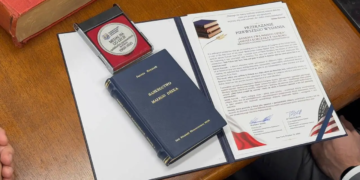
Poland’s parliament has completed work on a major disability assistance bill after MPs accepted 35 amendments introduced by the Senate on Thursday, 22 October. The legislation would establish a nationwide, publicly funded personal assistance service for approximately 100,000 people with disabilities, allowing eligible individuals to receive help with everyday activities, employment, education and independent living. The system is planned to begin operating in 2028, subject to the president signing the bill into law.
The lower house, the Sejm, considered the amendments during Thursday evening’s parliamentary sitting, bringing the legislative process closer to completion.
According to official Sejm voting records, MPs voted on motions to reject the Senate’s amendments, but none secured the required absolute majority.
- Find more news from Poland on our Homepage .
Under Poland’s Constitution, amendments adopted by the Senate remain in legislation unless the Sejm rejects them by an absolute majority. This means all 35 changes survived the final parliamentary review.
The legislation must now be submitted to Poland’s president, who can sign it, veto it or refer it to the Constitutional Tribunal under the procedures established by the Constitution.
The law has therefore cleared parliament but is not yet in force.
What will Poland’s new personal assistance system provide?
The legislation is designed to give eligible people with disabilities greater control over their daily lives, rather than requiring them to depend entirely on family members or informal carers.
An assistant could provide practical support with activities such as getting dressed, preparing meals, shopping, travelling, attending work or university, and participating in social or cultural activities.
Some basic medical or care-related tasks could also be permitted following appropriate instruction or training.
The legislation places emphasis on the person receiving assistance deciding what support is needed and who should provide it.
According to the Ministry of Family, Labour and Social Policy, the reform is intended to replace reliance on temporary funding programmes with a more predictable statutory system.
The ministry estimates that approximately 100,000 people with disabilities and around half a million family members could benefit directly or indirectly.
Services would be organised through Poland’s powiats, local administrative districts broadly comparable to counties, which could provide assistance themselves or commission qualified organisations to deliver it.
The system is intended to operate nationwide.
Who will qualify for assistance?
The legislation establishes eligibility requirements based on age and an official assessment of support needs.
The initial programme is intended primarily for adults aged 18 to 65 who receive a support-needs assessment of at least 80 points.
The assessment determines the level of assistance a person requires, with decisions taking account of factors including their own assessment of their needs and a direct interview.
From 2030, the statutory system is intended to extend to young people aged 13 to 17.
The number of hours available would depend on individual circumstances and the assessed need for support.
| Year | Maximum monthly personal assistance |
|---|---|
| 2028 | 200 hours |
| 2029 | 220 hours |
| From 2030 | 240 hours |
These are maximum entitlements under the planned phased system, not guaranteed allocations for every eligible person. Adults may receive as few as 20 hours monthly, depending on their assessment.


For eligible teenagers, the planned entitlement would range from 20 to 80 hours monthly.
Assistance would be granted through an administrative decision, potentially valid for up to five years.
People would generally be able to nominate their preferred assistant or ask the service provider to present suitable candidates.
These provisions are contained in the bill originally passed by the Sejm in September, as described in contemporary reporting by Polityka Senioralna.
What did the Senate amendments change?
The Senate introduced 35 amendments on 13 October, most involving legal drafting, administration or implementation.
Several changes, however, would directly affect the organisation and flexibility of assistance.
Greater flexibility over unused hours
One amendment allows assistance hours left unused in one month to be used during subsequent months of the same calendar year.
The total accumulated unused hours cannot exceed twice the person’s allocated monthly entitlement at any one time.
Any unused hours must be taken by 31 December and cannot be carried into the following year.
The change is intended to accommodate circumstances such as illness, unexpected disruption or temporary difficulties arranging assistance.
More choice when an assistant is unavailable
Another amendment clarifies the procedure for replacing an assistant who is absent.
The person receiving assistance would be able to nominate a replacement themselves.
If an absence is reported at least 30 working days beforehand, the provider would normally have to offer at least two candidates.
For shorter-notice absences, the requirement would generally be at least one candidate, with additional arrangements available for longer periods.
Possible increases to assistants’ hourly rates
The Senate also introduced a provision allowing the government to adjust hourly payment rates through secondary legislation.
Such adjustments could reflect changes in the minimum wage, minimum hourly pay and average earnings.
However, the measure does not require automatic annual increases or guarantee that rates will be raised in any particular year.
More recognition of practical experience
An amendment broadens the ways prospective assistants can demonstrate relevant experience.
It includes a route based on at least 120 hours of direct support provided to a person with disabilities during the preceding five years, supported by documentation from a social assistance institution.
Arrangements for younger recipients
The Senate also included measures intended to make it easier for young people receiving assistance to move into the adult system.
From 2030, certain young recipients could apply for their adult support-needs assessment after turning 16, potentially reducing interruptions when they turn 18.
Another transitional provision would allow people selected by eligible users to act as assistants until the end of 2029 even if they do not yet meet the formal experience or qualification requirements, provided other legal conditions are satisfied.
These provisions are recorded in the Senate’s 13 October resolution, which details all 35 amendments.
Why are people aged over 65 still excluded?
The upper age limit remains one of the most contested elements of the legislation.
Under the rules approved by parliament, people who first meet the qualifying conditions after reaching 65 generally would not be able to enter the new statutory assistance system.
People who received an assistance decision before their 65th birthday could continue receiving support for the remaining validity of that decision.
During the legislative process, amendments were proposed to remove the upper age limit and reduce the 80-point threshold used to determine eligibility.
Advocates argued that people with substantial support needs should not be excluded simply because of their age or because they narrowly missed a points threshold.
The Senate also discussed concerns raised by its legislative experts about equality and the UN Convention on the Rights of Persons with Disabilities.
Those proposals to widen initial eligibility were not incorporated into the final set of 35 Senate amendments.
The government has described the legislation as a compromise between the needs of people with disabilities and the state’s financial and administrative capacity.
Deputy Family Minister Katarzyna Nowakowska told senators that the legislation provides for a review after three years, creating an opportunity to consider expanding eligibility.
This means the current restrictions remain part of the proposed statutory system, despite broader improvements to how assistance would operate.
Why will the system not start until 2028?
The original government plans envisaged introducing the statutory service earlier, but the implementation timetable was extended to allow public institutions to prepare.
The new framework requires administrative assessment procedures, an information technology system, registers of assistants and providers, and arrangements for financing and supervising services.
The Social Insurance Institution (ZUS) and local authorities will have important roles in establishing the infrastructure.
Under the staged timetable described by the Family Ministry, applications for statutory assistance would begin 12 months after the law’s publication, while services would begin 16 months after publication.
The exact implementation dates will therefore depend on when the final legislation is signed and officially promulgated.
The government is working towards a 2028 start, but that does not mean eligible people can apply immediately following Thursday’s parliamentary vote.
Existing temporary personal assistance programmes are separate from the proposed statutory entitlement.
Why is the reform significant?
For years, disability organisations have called for personal assistance to be recognised as a dependable public service rather than support that depends on temporary grants and annual programme decisions.
Under the previous arrangements, availability could differ considerably between local authorities, and users could face uncertainty about whether funding would continue.
Supporters of a statutory system argue that personal assistance enables people with disabilities to exercise greater control over their lives, pursue work or education, and participate more fully in society.
It can also reduce the extent to which relatives must provide assistance that would otherwise be unavailable.
The proposed law refers to the principle of independent living set out in Article 19 of the UN Convention on the Rights of Persons with Disabilities.
The principle is that people with disabilities should be able to participate in their communities with appropriate support rather than being compelled to rely exclusively on institutional care or family assistance.
However, the legislation’s practical effectiveness will depend on several factors, including the availability of trained assistants, sufficient funding and the ability of local authorities to organise services.
The 80-point threshold and upper age limit mean that the new entitlement will not cover every person with a disability who may need assistance.
What happens next?
The parliamentary stage has been completed following the Sejm’s decision to retain the Senate amendments.
The bill will now proceed to the president for constitutional consideration.
If signed and promulgated, the legislation would provide a legal foundation for preparing Poland’s nationwide personal assistance system.
The principal challenges would then shift from parliamentary approval to implementation: recruiting assistants, preparing local authorities, building administrative systems and determining how the new service will operate in practice.
For approximately 100,000 potential recipients, the parliamentary decision represents progress towards a more predictable system of personal assistance.
But the entitlement will become available only after the remaining legal steps and phased implementation have been completed.