Polish surgeons have performed two complex robot-assisted operations to remove an entire lung from patients with cancer, with both patients leaving hospital just four days after their procedures. The operations, carried out at the Stefan Cardinal Wyszyński Provincial Specialist Hospital in Lublin, are among an uncommon group of procedures requiring surgeons to remove a complete lung using minimally invasive robotic technology rather than conventional open-chest surgery.
The hospital reported the results through regional media on Monday, 26 October.
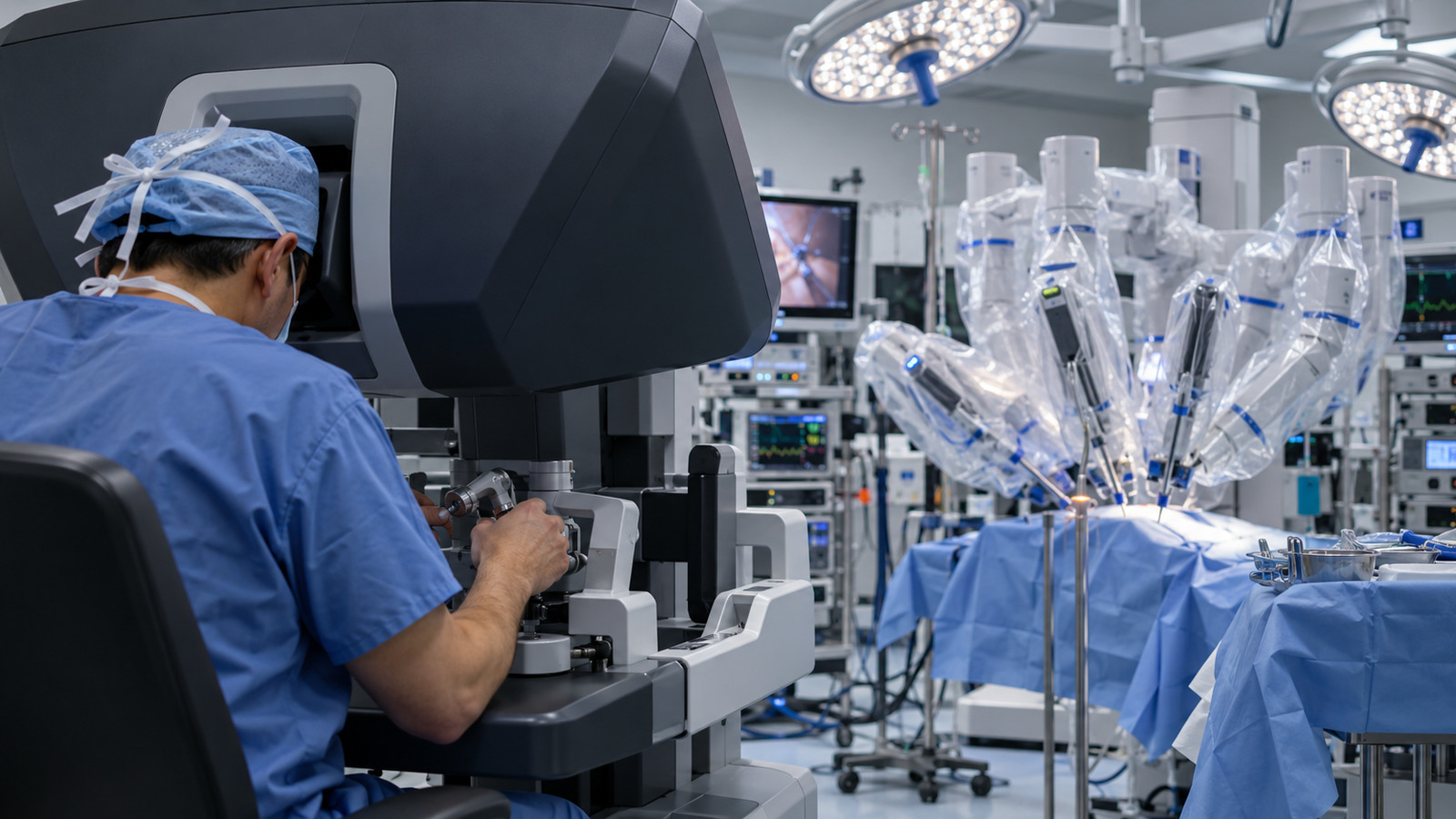
The procedures, known medically as pneumonectomies, were performed at the hospital’s Surgical Robotics Education Centre using the da Vinci robotic surgery system.
- Find more news from Poland on our Homepage .
Each operation involved a different patient with locally advanced lung cancer.
According to Radio Lublin’s report on the procedures, both patients were able to begin moving on the day of surgery and were walking independently the following day.
They returned home on the fourth postoperative day.
The precise dates of the operations have not been disclosed in the reports reviewed.
Why removing an entire lung is such a complex operation
A pneumonectomy is a major surgical procedure in which a patient has one complete lung removed.
It differs from a lobectomy, which involves removing one of the sections, or lobes, of a lung while preserving the remaining tissue.
Doctors generally consider removing an entire lung when the location or extent of a disease makes a smaller operation unsuitable.
In the two Lublin cases, the hospital said the patients had locally advanced cancer and that removing only part of the affected lung would not have provided an adequate surgical treatment.
Dr Mariusz Kędra, a thoracic surgeon involved in the operations, explained that complete lung removal is reserved for cases where doctors cannot safely preserve part of the organ.
Pneumonectomy is among the more demanding forms of chest surgery because surgeons must separate and close major blood vessels and the airway supplying the affected lung.
The procedure carries risks including bleeding, respiratory complications and cardiovascular problems.
Traditional open surgery usually involves a thoracotomy, in which surgeons make an incision in the chest wall and spread the ribs to access the lung.
In robot-assisted surgery, the surgeon instead works through smaller incisions using instruments attached to robotic arms.
The robot does not operate independently. The instruments are controlled by a trained surgeon, who works at a console with a magnified view of the operating area.
Robot allows surgeons to operate around major blood vessels
The Lublin surgical team used a da Vinci system, whose instruments allow highly controlled movements inside the chest.
According to regional reporting containing Kędra’s account of the operations, one of the principal challenges was separating tissues close to major blood vessels while preparing the affected lung for removal.
The surgeon said the technology allowed precise dissection and removal of nearby lymph nodes while limiting blood loss.


Another technical difficulty was removing the entire lung through the relatively small surgical access incisions.
Kędra described robotic pneumonectomy as uncommon internationally because of these challenges.
Each Lublin operation lasted approximately two hours, according to the hospital.
That duration was comparable to conventional open surgery, but the surgical approach avoided the extensive rib spreading associated with a traditional thoracotomy.
The team said this reduced tissue trauma and helped patients begin moving sooner after their operations.
However, the experience of two patients does not establish that robotic pneumonectomy is safer or more effective than other surgical techniques in every clinical situation.
The appropriate surgical method depends on the individual patient’s condition, tumour characteristics and the experience of the surgical team.
Both patients discharged after four days
The patients’ early recovery was one of the most notable aspects of the hospital’s announcement.
Both reportedly began getting out of bed on the day of surgery.
By the following day, they were able to walk independently.
They were discharged on the fourth postoperative day.
Kędra said the hospital had subsequently assessed both patients at appointments held ten days after discharge.
According to the surgeon, they were breathing adequately and could climb stairs without difficulty.
The patients remained under ongoing oncological care.
These are encouraging short-term results, particularly given the extent of the operations.
Nevertheless, discharge from hospital does not mean a patient has fully recovered from removal of a lung.
Pneumonectomy involves substantial physiological changes, and patients may require extended rehabilitation, respiratory monitoring and further cancer treatment.
Nor does the reported recovery establish that either patient has been cured of cancer.
The hospital has not released longer-term outcome data for these two cases.
How rare are robotic pneumonectomies?
Robot-assisted operations involving smaller lung resections are becoming increasingly established in specialist thoracic surgery centres.
Complete lung removal using a robotic system remains considerably less common.
A peer-reviewed study published in Frontiers in Surgery in June 2026 examined 21 robotic pneumonectomies carried out at a major American hospital between 2019 and 2024.
The researchers reported a median hospital stay of five days, although recovery times varied substantially.
The study also documented complications and a death within 90 days of surgery, illustrating why encouraging early results must be considered alongside the procedure’s risks.
The publication provides evidence that the technique is being used internationally, but does not establish precisely how often it is performed in Poland.
The Lublin hospital describes its procedures as among the first of their kind in the country.
No comprehensive national register confirming their exact position in the history of Polish robotic pneumonectomy was identified during this review.
The development is therefore significant as an example of advanced surgical practice, without needing to be described as a world first.
Lublin expands its robotic surgery programme
The operations form part of a wider investment in robotic thoracic surgery at the Lublin hospital.
Its Surgical Robotics Education Centre expanded into chest surgery in August 2025.
According to the hospital’s earlier official account of its programme, its surgeons had already carried out more than 130 robotic thoracic procedures during the programme’s first year.
The hospital reported that these included approximately 120 lobectomies, as well as operations involving tumours in the mediastinum, the space between the lungs.
By the October announcement, the centre said its cumulative number of thoracic operations had reached approximately 160.
Earlier achievements have included robot-assisted operations removing tumours from both the lung and adrenal gland during the same anaesthetic.
Those procedures involved coordinated work between thoracic surgeons and surgical oncology specialists.
The hospital also uses enhanced recovery protocols intended to support patients before, during and after surgery.
Hospital director Piotr Matej said the expansion of robotic surgery was allowing the centre to undertake increasingly complex procedures.
The team is considering further applications of the technology, including multidisciplinary operations involving oesophageal tumours.
Those remain future clinical developments rather than completed procedures announced alongside the pneumonectomies.
A new option for selected cancer patients
The two operations illustrate how advances in surgical equipment and specialist training are expanding the range of procedures that can be carried out using minimally invasive techniques.
For selected patients with lung cancer, this could mean less trauma to the chest wall and an earlier return to movement after surgery.
But removing an entire lung remains a major medical intervention, irrespective of the instruments used.
The choice between robotic, video-assisted and open surgery requires assessment of tumour location, disease extent, lung function and overall patient fitness.
The Lublin cases provide encouraging evidence of what one experienced surgical team has achieved, but broader clinical studies are needed to determine the advantages and limitations of robot-assisted pneumonectomy across different patient groups.
For now, the significance of the hospital’s announcement lies in two reported clinical achievements: surgeons completed particularly demanding procedures using robotic assistance, and both patients were able to return home within four days.
Their longer-term progress remains a matter for continuing medical follow-up.