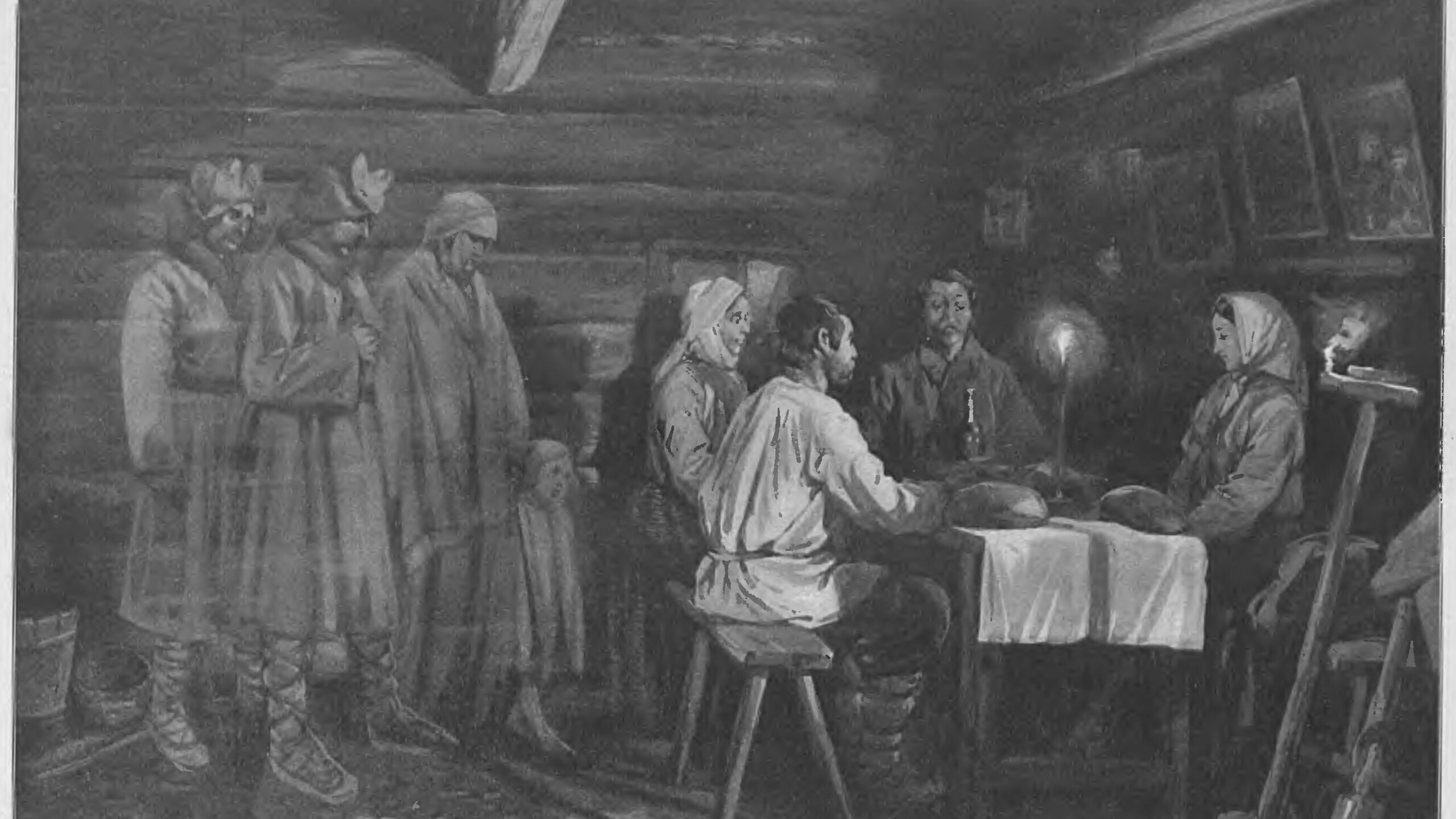
In parts of old rural Poland, a table was not always cleared after a memorial supper. Food might be left for an unseen guest, a fire kept burning, and certain household chores postponed until morning.
The reason lay in an extraordinary folk belief: the souls of the dead could return to the places they had known in life.
These traditions formed part of a wider group of remembrance customs known as Dziady, associated with honouring deceased ancestors and maintaining a connection between the living and the dead.
- Find more news from Poland on our Homepage .
As Poland approaches All Saints’ Day on 1 November and All Souls’ Day on 2 November, the history of these older customs offers a fascinating glimpse into a world of beliefs that survived for generations.
They also inspired Adam Mickiewicz, whose dramatic cycle Dziady, known in English as Forefathers’ Eve, became one of the most influential works in Polish literature.
When the dead were expected to visit
The word dziady carries several connected meanings.
It can refer to ancestors or forefathers, but historically it also described elderly beggars who occupied an important place in traditional acts of charity and remembrance.
The customs associated with Dziady were not identical across Poland. They varied between communities and periods, with particularly strong associations in the eastern territories of the former Polish-Lithuanian Commonwealth.
The underlying belief was that, at certain times of year, the boundary separating the living from the dead became easier to cross.
Souls might return to their former homes, visit relatives or seek assistance from those still alive.
According to Poland’s government educational portal, traditional observances included meals prepared for ancestral spirits and gifts of food offered to those thought to have a special connection with the dead.
Families might prepare groats, honey, eggs or other familiar foods. In some accounts, offerings were also left at graves or places associated with ancestral remembrance.
The intention was not simply to feed the living participants in a gathering.
Within the belief system, food was understood as a gesture of hospitality towards departed relatives.
Why fires burned and household work stopped
Fire was another important element of these traditions.
Some communities lit fires because they believed flames could guide wandering souls towards their families or offer them warmth.
The symbolism made particular sense during the colder months, when darkness arrived early and the natural world appeared to be withdrawing into winter.
There were also rules governing everyday activities.
In some regional traditions, people avoided sewing, spinning or winding thread because they feared visiting souls could become entangled.
Others refrained from clearing the supper table or throwing water outside, lest they disturb or harm spirits believed to be nearby.


These beliefs were expressions of the communities’ traditional understanding of death, rather than evidence of supernatural events.
Some customs also connected remembrance with charity.
Food was shared with elderly beggars, sometimes in return for prayers for the deceased. Such acts became part of the relationship between older folk traditions and Christian practices of remembrance.
Importantly, Dziady should not be understood as one fixed festival observed throughout ancient Poland on a single date.
Ethnographic and literary accounts describe remembrance observances at different times of year, including spring and autumn.
Although the traditions are often linked with pre-Christian Slavic beliefs, their exact early forms and chronology cannot be reconstructed with certainty from later descriptions.
How Adam Mickiewicz transformed folklore into literature
One of the most enduring legacies of these customs is literary rather than ceremonial.
In 1823, Adam Mickiewicz published the second and fourth parts of Dziady in Vilnius, drawing upon the folk culture of the lands where he had grown up.
Part II takes place in a cemetery chapel, where villagers gather under the guidance of a ritual leader known as the Guślarz.
The assembled people summon spirits and attempt to relieve their suffering.
Among the visitors are two children, the ghost of a cruel landowner and a young woman unable to find peace.
Each encounter carries a moral lesson about human conduct, compassion, suffering or responsibility.
Mickiewicz combined elements of traditional belief with Christian ideas, including punishment, salvation and the afterlife.
His work helped transform a localised world of folk customs into a central part of Polish Romantic literature.
But the drama should not be mistaken for a precise ethnographic account of how every historical Dziady ceremony was conducted.
As the Polish National Library’s research on Mickiewicz and folk beliefs explains, the poet drew deeply on the cultural traditions of his childhood while reshaping them through literary imagination.
The resulting work became much more than a portrayal of ancestral remembrance.
Other parts of Dziady developed themes of love, political oppression and national identity, giving the cycle a lasting place in Poland’s cultural history.
From ancestral rituals to modern remembrance
Today, the beginning of November in Poland is associated above all with illuminated cemeteries, chrysanthemums and families visiting the graves of loved ones.
But the two main Christian observances have distinct meanings.
All Saints’ Day, on 1 November, honours those who have attained salvation in Christian belief.
All Souls’ Day, on 2 November, is devoted to prayer for the faithful departed.
These are Christian liturgical observances, not simply renamed versions of an earlier Slavic festival.
Nevertheless, older folk beliefs and Christian practices interacted over centuries, producing regional customs that could combine religious prayer with traditional ideas about the continuing presence of the dead.
The emphasis also changed.
Modern cemetery visits are chiefly acts of remembrance, mourning and religious devotion, rather than preparations for the physical return of ancestral spirits.
Yet the historical customs reveal something that remains recognisable: the desire to maintain a connection with people whose lives have ended.
For earlier generations, that connection could mean leaving bread on a table, keeping a fire alive or avoiding a household task so an unseen visitor would not be disturbed.
For many Polish families today, it means gathering around a grave illuminated by candles.
The beliefs are different, but the underlying human concern — remembering those who came before — remains remarkably familiar.