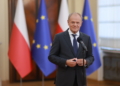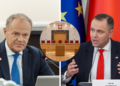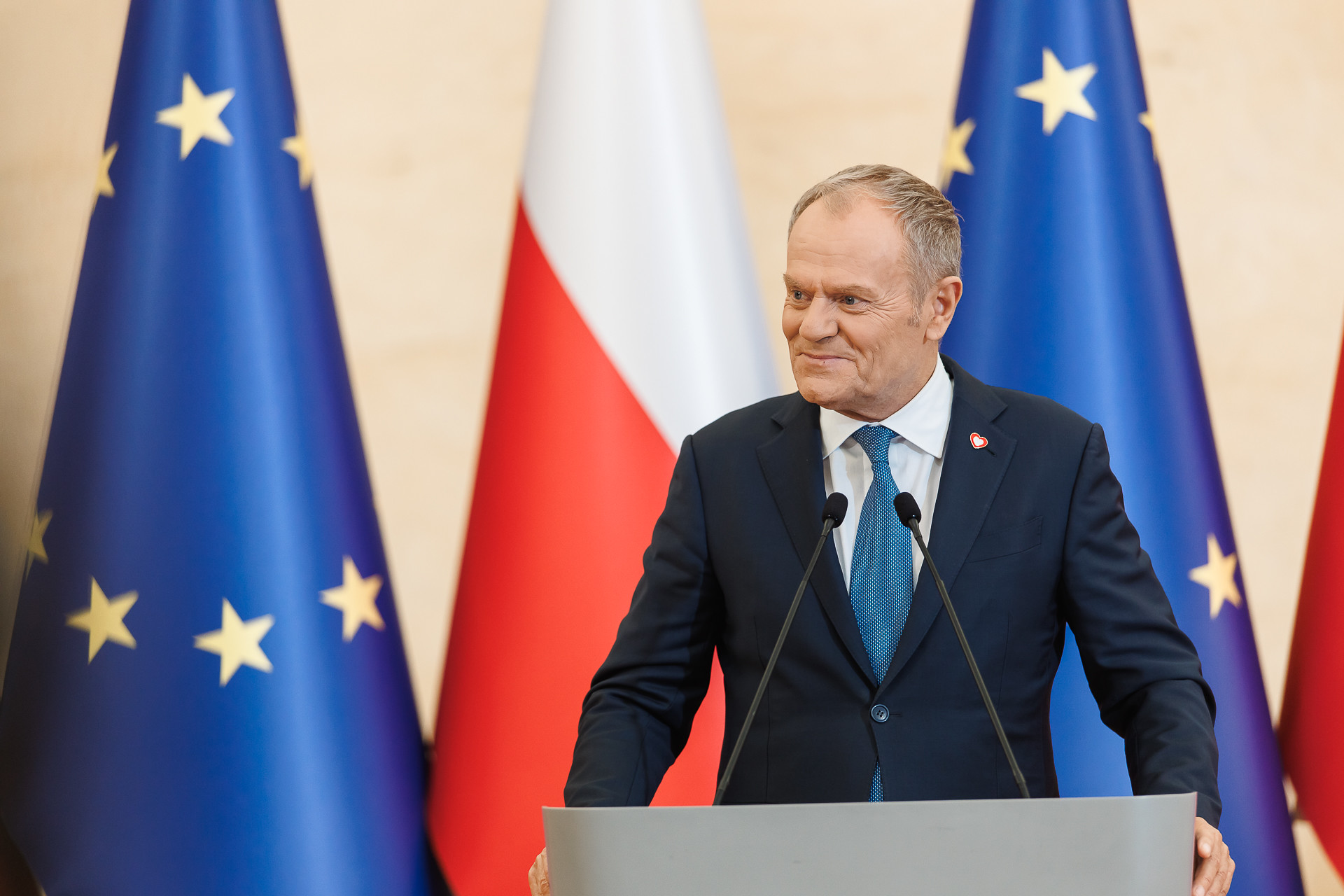
Polish Prime Minister Donald Tusk has publicly invited President Karol Nawrocki and his family to his home in Sopot for a meeting before Christmas, making an unusually personal appeal for dialogue amid continuing tensions between the country’s two most senior political leaders.
The invitation came on Wednesday, 11 November, during an Independence Day speech in Szczecin, where Tusk attended a ceremony marking the christening of a new Polish ferry.
Addressing Nawrocki directly, the prime minister proposed that they meet privately, share a traditional Christmas wafer and discuss Poland’s future.
- Find more news from Poland on our Homepage .
The gesture follows an unsuccessful attempt to arrange talks between the two leaders over the continuing dispute surrounding Poland’s Constitutional Tribunal.
Tusk invites Nawrocki and his family to Sopot
Speaking at the ceremony for the Bursztyn Unity ferry, Tusk said he had been expecting an invitation to meet the president but had decided to take the initiative himself.
He invited Nawrocki to visit his home in Sopot, on Poland’s Baltic coast, together with his wife and children.
The prime minister proposed sharing an opłatek, the thin Christmas wafer traditionally exchanged among Polish families as a gesture of goodwill, forgiveness and reconciliation.
Importantly, Tusk suggested meeting before Christmas Eve, rather than inviting the president to spend Christmas Eve itself with his family.
According to PAP’s account of the prime minister’s speech, Tusk acknowledged that his home was not large but said there would be room for the two men to sit together at the kitchen table.
He proposed that they talk “like one Pole with another”.
The prime minister also emphasised the wider significance of dialogue, saying that Poland was worth their conversation and the solidarity of its people.
His remarks were reported directly by political news service 300polityka, which published an account of the invitation shortly after the speech.
The proposal was public and personal, but it did not establish a confirmed meeting date.
No acceptance from Nawrocki had been verified in the reporting reviewed.
Invitation follows stalled talks over constitutional crisis
The invitation comes against the backdrop of a serious political and institutional dispute between the government and the president.
Tusk leads Poland’s governing coalition, while Nawrocki was elected with the backing of the opposition Law and Justice (PiS) party.
Their disagreements have become particularly pronounced over the Constitutional Tribunal, Poland’s constitutional court.
The two sides dispute the legality of changes affecting the tribunal’s leadership and the ability of certain judges to exercise their functions.
During a National Security Council meeting on 3 November, Nawrocki accused the government of unconstitutional actions concerning the court.
The president’s official account of that meeting described the situation as a serious constitutional crisis and blamed Tusk’s government for escalating it.
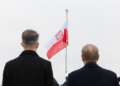
After the meeting, Tusk said he had proposed a private discussion with the president to explore ways of reducing political tensions.
By 6 November, however, the meeting had still not taken place.
Tusk told journalists that he had received a text message from Nawrocki and interpreted it as a sign that the president preferred to postpone their discussion.
The president’s office presented the situation differently.
Zbigniew Bogucki, head of Nawrocki’s office, argued that meaningful talks would be difficult while police remained at the Constitutional Tribunal and judges whom the presidential side considered lawfully appointed were prevented from carrying out their duties.
In comments reported by Rzeczpospolita on 10 November, Bogucki maintained that the government needed to take steps to ease the dispute before a meeting could proceed.
Jan Grabiec, the prime minister’s chief of staff, rejected the idea of imposing preliminary conditions, arguing that Poland’s president and prime minister should be able to speak directly.
The disagreement therefore concerns both the underlying constitutional dispute and the conditions under which the two leaders should meet.
Poland-24 previously examined Tusk’s proposals for resolving the Constitutional Tribunal crisis and the disagreement between the country’s political institutions.
Independence Day appeal for national unity
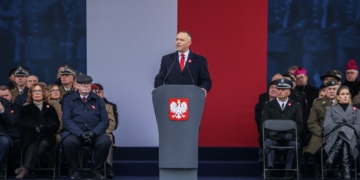
Tusk used his Independence Day speech to appeal for greater solidarity among Poles despite political disagreements.
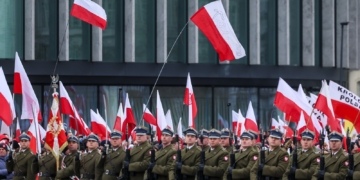
Poland celebrates 11 November as the anniversary of the restoration of its independence in 1918, after more than a century of partition by neighbouring powers.
The prime minister said that national security, freedom and independence were responsibilities shared by all citizens, regardless of political affiliation.
He also addressed people preparing to take part in the annual Independence March in Warsaw, urging them to recognise common national interests despite their differences.
According to Rzeczpospolita’s account of the speech, Tusk called on Poles to reach out to one another rather than allow political divisions to dominate the national holiday.
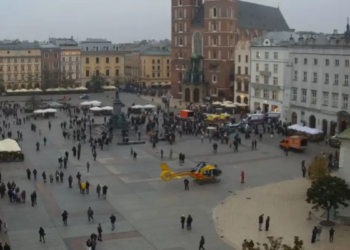
His remarks also acknowledged the recent mass shooting in Kraków.
The prime minister expressed solidarity with victims, their families and the two police officers injured while stopping the attacker.
Both Tusk and Nawrocki had attended a silent memorial march in Kraków on Monday, 9 November, but no substantive private discussion between them was confirmed on that occasion.
The Independence Day invitation was therefore another public attempt to bring the two leaders together.
Invitation made during ceremony for new Polish ferry
The speech took place at Wały Chrobrego, the historic waterfront in Szczecin, during the christening and Polish flag-raising ceremony for the Bursztyn Unity ferry.
The Prime Minister’s Office confirmed the event, which formed part of the city’s Independence Day celebrations.
Bursztyn Unity is the second of three ferries being built under the Polish Sea programme for the Polish Steamship Company.
The government says the programme is intended to modernise Poland’s ferry fleet and increase the number of merchant vessels operating under the Polish flag.
The ceremony provided the setting for Tusk’s broader message about national achievements, cooperation and the importance of avoiding further political divisions.
Will Nawrocki accept the invitation?
The next question is whether Nawrocki will accept the proposed visit and whether a private meeting could help ease the tensions between their offices.
The president has not been shown to have agreed to the invitation in the sources reviewed for this article.
Nor has either side announced a date or agenda for the proposed discussion.
The constitutional dispute remains unresolved, and the public statements from the two offices indicate that significant differences persist over how it should be addressed.
For now, Tusk’s invitation represents a new attempt to establish personal dialogue, rather than evidence that a political agreement is approaching.
Whether the two leaders eventually sit down together in Sopot remains to be seen.