
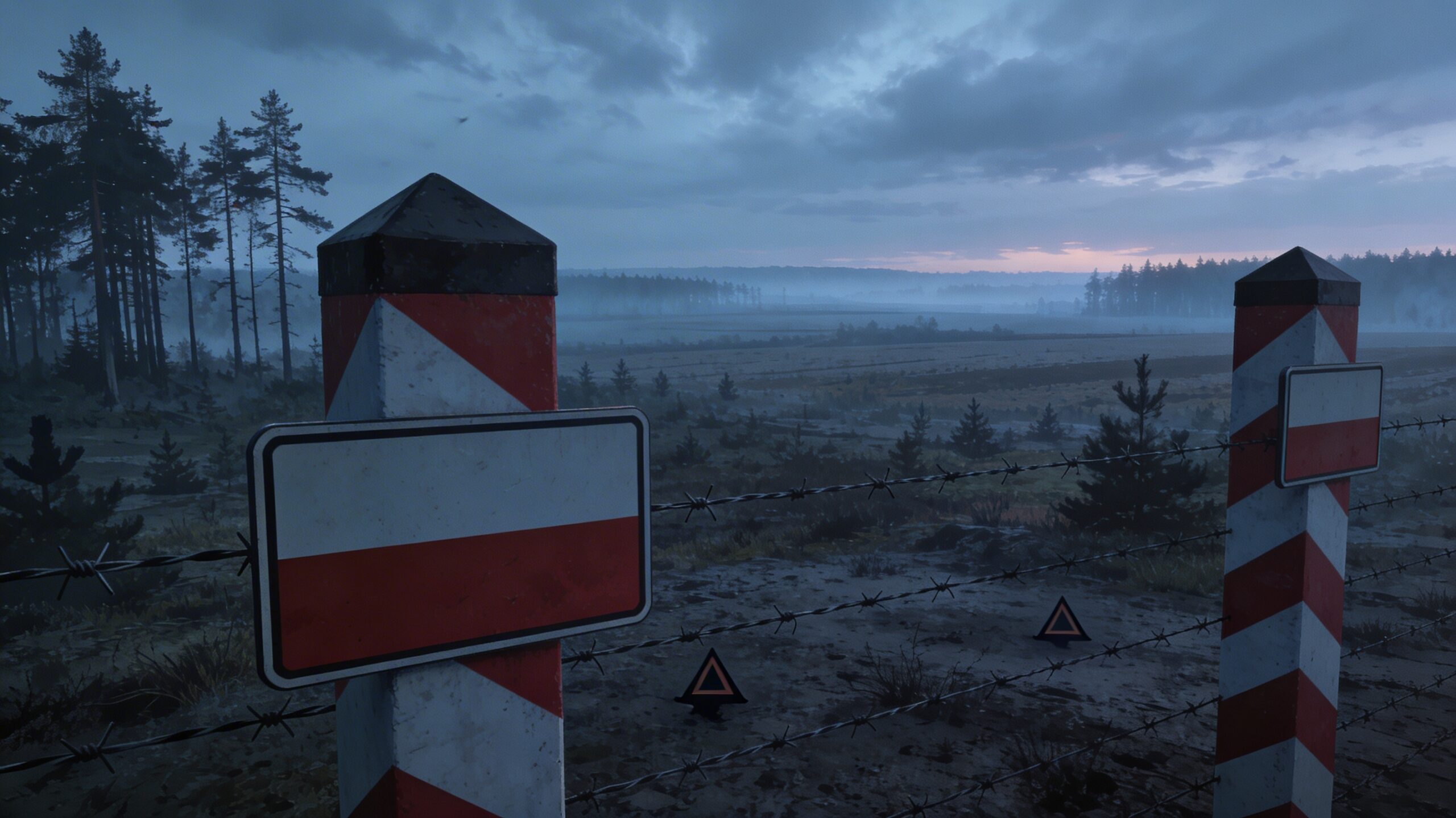
Poland is moving to rapidly restore land mines along its eastern frontier after formally withdrawing from a global treaty banning their use, a step Prime Minister Donald Tusk says is essential to deter Russia as the war in neighboring Ukraine grinds on.
Speaking Friday as Poland’s exit from the Ottawa Convention took effect, Tusk said Warsaw will soon have the capability to lay mines along its borders with Russia “within 48 hours” in the event of a threat, underscoring a dramatic shift in defense policy on NATO’s eastern flank. The move aligns Poland with a small group of regional states that have turned away from the landmark anti-land-mine accord, arguing that conventional deterrence is no longer sufficient in the face of Moscow’s military posture.
On Thursday, Tusk unveiled a new mine-laying platform known as Bluszcz, or “Ivy,” describing it as a hybrid system designed for stealth and high autonomy that will be integrated into a broader defensive architecture on the frontier. “Today, you saw a brief presentation of the capabilities of the Bluszcz system,” he said, calling the project a core component of the so-called East Shield plan to harden Poland’s border infrastructure and slow any potential incursion.
“We are in the process of finalising this mine project within the East Shield, which is crucial to our security, our territory, and our border,” Tusk said. “This also includes the capability we will soon achieve – the ability to mine the Polish border in the event of a threat within 48 hours.”
The declaration marks a watershed for Poland, which for years presented itself as a champion of the Ottawa Convention, signed in 1997 to end the use, stockpiling, production and transfer of anti-personnel land mines worldwide. Human rights groups have long condemned such weapons for their devastating and often indiscriminate impact on civilians, who can be killed or maimed decades after conflicts end.
Poland and several of its neighbors argue that the threat calculus has changed since Russia’s full-scale invasion of Ukraine in 2022. In August last year, Warsaw joined Finland, Ukraine and the Baltic states of Estonia, Latvia and Lithuania in announcing plans to withdraw from the convention, framing land mines as a necessary layer in modern border defense rather than relics of Cold War-era warfare.
Officials in the region fear that their countries could be targeted next by Russia, which never signed the treaty and continues to rely heavily on mines and other area-denial systems in Ukraine, where front lines remain heavily fortified after nearly four years of fighting. The concern has only deepened as peace talks have stalled and Russian forces have adapted to Western sanctions and military support for Kyiv.
Tusk’s unveiling of Bluszcz comes as Poland accelerates a broader military buildup that includes major purchases of tanks, artillery and air defense systems from the United States and South Korea, as well as domestic efforts to expand its arms industry. The new mine-laying platform is intended to mesh with those capabilities, creating layered defenses that could complicate any attempt by hostile forces to cross into Polish territory or test NATO’s security guarantees.
The Bluszcz system, described by Tusk as stealthy and highly automated, is designed to be rapidly deployed along vulnerable stretches of the frontier in a crisis, according to Polish officials. While technical specifications were not fully disclosed, the platform is expected to allow Polish forces to quickly seed defensive minefields, potentially using programmable or remotely controlled munitions that can be deactivated or removed when a threat subsides.
Polish authorities have not publicly detailed how they plan to address the humanitarian and legal implications of reintroducing land mines, nor how they will ensure compliance with international norms meant to protect civilians in conflict zones. Rights advocates have warned that even technologically advanced mines pose serious risks if they are not tightly controlled and thoroughly cleared after hostilities end.
Supporters of the new policy contend that the costs of inaction are higher. They point to repeated Russian missile strikes, cyberattacks and hybrid operations across Europe, as well as incidents along the borders of NATO states, as evidence that Moscow is prepared to probe the alliance’s defenses and political will.
By publicly linking Bluszcz to the East Shield initiative, Tusk signaled that mine warfare will become a permanent feature of Poland’s long-term security posture, not just an emergency measure. The East Shield plan envisions a network of fortifications, sensors and obstacles stretching along the frontier, intended to delay any invading force and give allied reinforcements time to mobilize.
The decision to leave the Ottawa Convention may also reverberate beyond the region, potentially emboldening other states to reconsider their commitments as geopolitical tensions rise. Diplomats and analysts say the shift could complicate global efforts to stigmatize land mines and secure adherence to the ban at a time when conflicts in Europe, the Middle East and Africa are fueling demand for low-cost defensive weapons.
For now, Polish officials are emphasizing the speed and readiness promised by the new system. Tusk’s pledge that Poland will be able to mine its border within two days of a perceived threat is meant to signal both resolve to domestic audiences and deterrence to Moscow, conveying that any aggression on the eastern flank would be met with immediate and formidable obstacles.
As the war in Ukraine shows no sign of waning, Poland and its neighbors are bracing for a protracted period of instability along NATO’s frontier. In that environment, Warsaw’s break with the land-mine ban underscores how some frontline states are willing to trade long-standing disarmament commitments for what they view as hard security at their borders.