Investigators examining the mass shooting that killed six people in Kraków have discovered that the attacker’s computer was used to visit websites about Norwegian far-right extremist Anders Behring Breivik, Poland’s justice minister has revealed. A firearm suppressor was also recovered from the suspect’s vehicle, while prosecutors continue investigating whether extremist beliefs influenced the attack.
Justice Minister and Prosecutor General Waldemar Żurek disclosed the findings on Tuesday, 10 November, three days after the shooting on Kraków’s historic Main Market Square.
Speaking to Radio Kraków, Żurek described far-right extremism as a significant line of inquiry, citing the computer evidence and symbols found among the suspect’s belongings.
- Find more news from Poland on our Homepage .
However, prosecutors have emphasised that the available evidence has not established a definitive motive, and investigators are examining a wider range of possible ideological influences.
The gunman, identified by prosecutors as 24-year-old Michał Oksiński, died in hospital on 9 November after being shot by police during the attack.
Investigators discover visits to websites about Anders Breivik
Żurek said investigators had gained access to the suspect’s computer and recovered information about websites visited before the shooting.
The material included pages concerning Anders Behring Breivik, the Norwegian far-right extremist responsible for the July 2011 attacks in Norway.
Breivik killed 77 people in two attacks: eight in a bombing in central Oslo and 69 on the island of Utøya, where a youth camp organised by Norway’s Labour Party was taking place.
In his original interview with Radio Kraków, Żurek said investigators could confirm that websites concerning Breivik had been visited using the suspect’s computer.
The minister described the possibility of far-right extremist influence as a strong investigative lead.
He also referred to symbols recovered from the suspect’s surroundings, including a yellow flag depicting a rattlesnake.
The flag, commonly known as the Gadsden flag, originated during the American Revolution and has since been used by various political movements, including some far-right groups.
Its presence alone does not establish membership of an extremist organisation or prove the suspect’s motivation.
Żurek additionally said investigators had secured the suspect’s workplace, where they found symbols that could be relevant to the ideological inquiry.
He stressed that authorities were examining the man’s personal environment and possible connections to wider political or extremist movements.
Prosecutors examine interest in other mass killings
Further information emerged later on Tuesday from prosecutors investigating the case.
Eryk Stasielak, head of the Małopolska branch of the National Prosecutor’s Office department handling organised crime and corruption, said investigators had established that the suspect had shown interest in mass killings in both Norway and the United States.
According to Polish Radio’s reporting on the prosecutor’s findings, the computer had been examined by Poland’s Internal Security Agency and the Central Bureau for Combating Cybercrime.
Stasielak said the evidence included material concerning mass murderers and individuals responsible for previous attacks.
He also acknowledged indications that Oksiński may have been interested in extremist ideologies.
You May Also Be Interested In

However, the prosecutor cautioned against drawing a definitive conclusion about whether those interests reflected far-right or far-left beliefs.
The digital examination is continuing.
That distinction is significant: browsing material about extremist attacks does not, on its own, prove admiration, ideological agreement or direct inspiration.
Investigators must establish how the material relates to the attacker’s actions, planning and possible motivation.
Firearm suppressor recovered from suspect’s car
Żurek also revealed that investigators found a firearm suppressor among the equipment recovered from Oksiński’s vehicle.
The device was discovered in the car’s boot, alongside weapons and ammunition.
The minister suggested that the discovery could be relevant to reconstructing the earlier killings of the suspect’s family members in Ostrowiec Świętokrzyski.
However, authorities have not established publicly that the suppressor was used during either incident.
Its presence is therefore evidence relevant to the investigation, not proof of precisely how the earlier killings were carried out.
The National Prosecutor’s Office previously confirmed that investigators recovered four firearms from the suspect and his car: two AR-15-style rifles and two pistols.
Police also secured several hundred rounds of ammunition and four mobile telephones.
A subsequent search of the suspect’s family home uncovered another seven firearms.
Prosecutors say Oksiński had obtained a firearms permit in January 2026 and purchased his first weapon in March.
Investigators are examining how the weapons were acquired, the suspect’s preparations and whether anyone else contributed to the crimes.
Six killed in Kraków and three family members found dead
The investigation concerns two incidents on 7 November.
According to prosecutors, Oksiński first killed his parents and 21-year-old sister at their family home in Ostrowiec Świętokrzyski, approximately 160 kilometres north-east of Kraków.
He subsequently drove to Kraków.
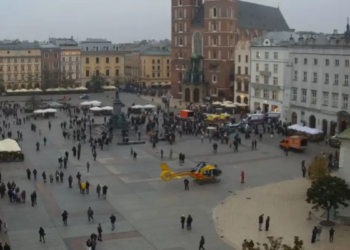
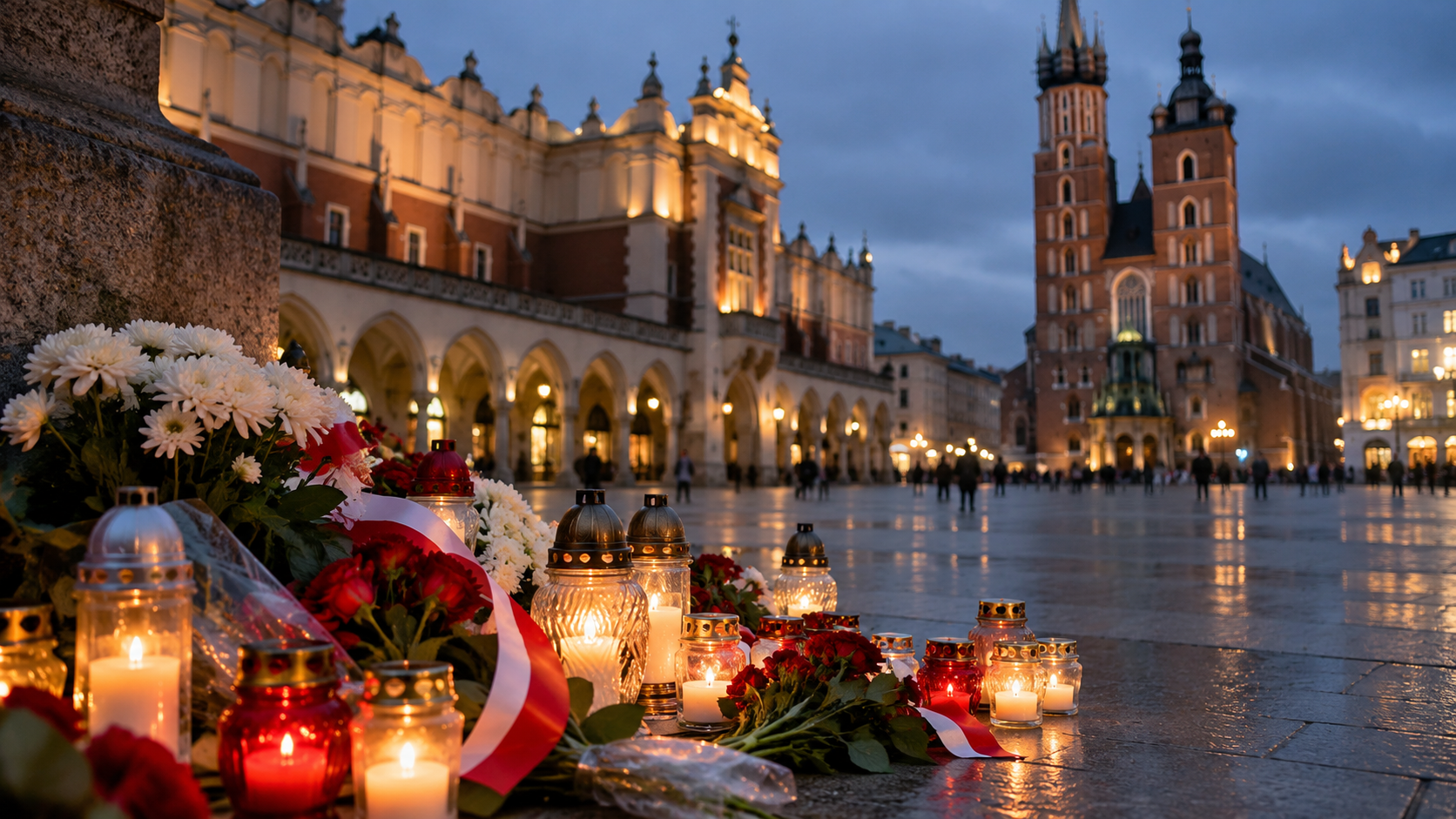
At approximately 15:00, the attacker entered the historic Main Market Square area in a vehicle and fired repeatedly at people in the streets.
Six people were killed: four Polish citizens, one British national and one Austrian national.
Another 15 people were injured, including two police officers who confronted and stopped the gunman.
Oksiński was seriously wounded during the police intervention and was taken to hospital.
He died on Monday, 9 November, before prosecutors could formally present charges against him.
Poland-24 has previously reported on the suspect’s death and the continuing criminal investigation, as well as the police intervention that ended the attack.
The National Prosecutor’s Office has opened an investigation into six murders and attempted murders in Kraków, treating the attack as an offence of a terrorist nature under Polish criminal law.
The three deaths in Ostrowiec Świętokrzyski are also part of the investigation.
Extremist motive remains unproven
The question of the gunman’s ideological motivation has already become politically contentious.
Interior Minister Marcin Kierwiński suggested shortly after the attack that the suspect had been influenced by far-right ideology.
Opposition Law and Justice leader Jarosław Kaczyński challenged that assertion, accusing the minister of making an unsupported claim.
As Reuters reported on 10 November, Żurek’s subsequent disclosure introduced new evidence relevant to the debate, but did not settle the question of motive.
The justice minister’s assessment is broader than the findings prosecutors have so far been prepared to establish conclusively.
There is also a legal distinction between the terrorist classification of the attack and evidence of a particular political ideology.
Polish prosecutors have described the Kraków shooting as an offence of a terrorist nature.
That does not mean they have established that the gunman was acting on behalf of a far-right organisation, followed a particular extremist doctrine or received instructions from another person.
No such organisational link has been publicly confirmed.
Investigation continues despite gunman’s death
Oksiński’s death means that he cannot be prosecuted for the killings.
Nevertheless, the National Prosecutor’s Office has confirmed that the investigation will continue.
One priority is determining whether anyone helped, encouraged or otherwise contributed to the crimes.
Investigators are also attempting to reconstruct the suspect’s movements, preparations and communications in the period preceding the attack.
Forensic specialists have examined the bodies of the victims and the gunman, while digital investigators continue analysing electronic devices and recovered material.
The inquiry is also expected to examine whether the attacks were planned independently and whether the suspect had meaningful connections to extremist individuals or groups.
For now, the findings announced by Żurek represent an important development in understanding the possible background to the Kraków shooting.
They provide investigators with further lines of inquiry, but they do not establish a final explanation for why the attack occurred.
The suspect’s motive remains under investigation.