

A Polish team of engineers and AI researchers has reached the top 16 of EngineAI’s Ultimate Robot Knock-out Legend tournament in Shenzhen after winning its qualifying group, in what the team describes as a major milestone for Polish humanoid robotics. Brave Mind Fighters says it was the only European Union team to get that far, after transferring movement skills trained in simulation onto a full-size physical humanoid robot competing in real-world tests.
The result puts a Polish-led project into the upper ranks of a field built around one of the most demanding areas of current robotics: so-called “Physical AI”, where software must control a machine operating in a changing physical environment rather than simply process data on a screen.
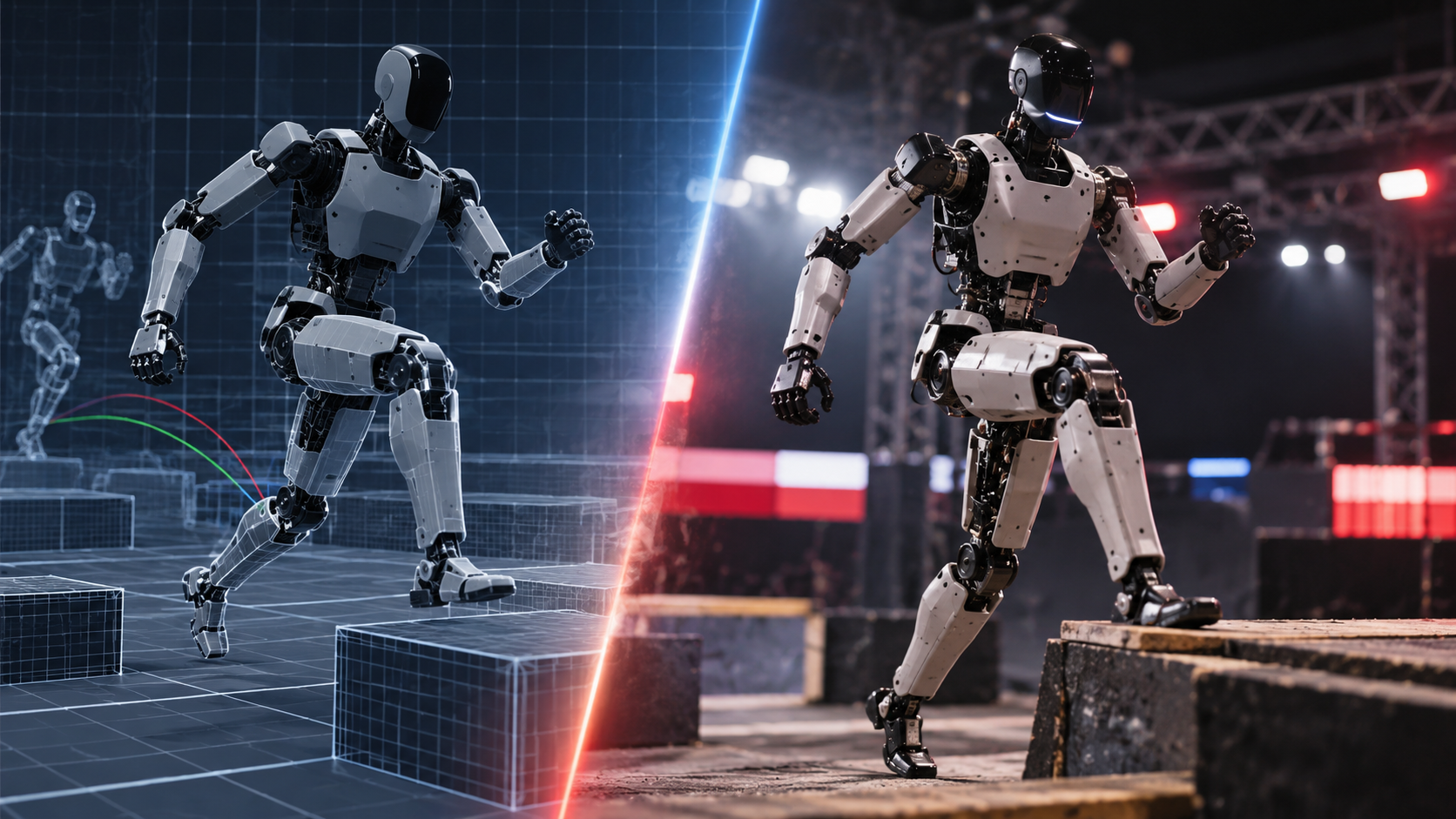
Brave Mind Fighters says the tournament is not just a spectacle of robots throwing punches. In the qualifying phase, teams had to prove that the behaviours developed in virtual training could be transferred to a real humanoid in a process known as “sim-to-real”. That, the team says, is one of the hardest steps in advanced robotics because gravity, friction, terrain and hardware limits can all change how a robot behaves outside simulation.
- Find more news from Poland on our Homepage .
Before the competition, the Polish team spent two weeks at a camp in China and then a further week testing on EngineAI’s T800 humanoid platform. Technical lead Piotr Gerke said the key challenge was transferring trained skills onto the real robot.
According to reporting on the event, the robot had to stand up independently from lying on its front and back, navigate an obstacle course, execute specified punches and kicks, and demonstrate striking power. The Polish team’s strongest event was the timed obstacle course, though the evaluation also included performative gestures designed to give robots more recognisable characters in future head-to-head bouts.
The tournament robot itself is a substantial machine. EngineAI says the T800 stands 173 centimetres tall, offers 29 degrees of freedom across the body excluding dexterous hands, and can deliver joint torque of up to 450 newton metres. Depending on the configuration, it weighs between 75 and 85 kilograms.
That hardware is not the main competitive differentiator, however. Brave Mind Fighters says the contest centres on the software and control systems created by participating teams. The Polish group describes itself as an interdisciplinary team of engineers, researchers and AI creators from Poland developing motion-control systems for humanoid robots. Its stated ambition is to show that world-class solutions in Physical AI and humanoid robotics can be built in Poland.
The result also appears to have practical value beyond the ranking itself. Reporting on the Shenzhen stage says the Polish team received a T800 robot for winning its group, giving it continued access to a physical humanoid for further testing rather than relying mainly on simulation. That could materially accelerate future development work.
The next stage of the tournament is scheduled for November, when robots are expected to face each other directly and systems will have to react to an opponent’s behaviour in real time. The final is planned for December.
For Poland-24 readers, the significance of the story is not really that “robots are fighting”. It is that a Polish team has shown it can compete internationally in a frontier field combining AI, control systems, motion generation and real-world robotics. In a European landscape where much of the attention around AI still focuses on software alone, Brave Mind Fighters’ advance is a reminder that the next phase of the technology race will also be physical.