

A photographer from Poland has turned a long-running fascination with Olsztyn’s city-dwelling beavers into a European wildlife-photography success.
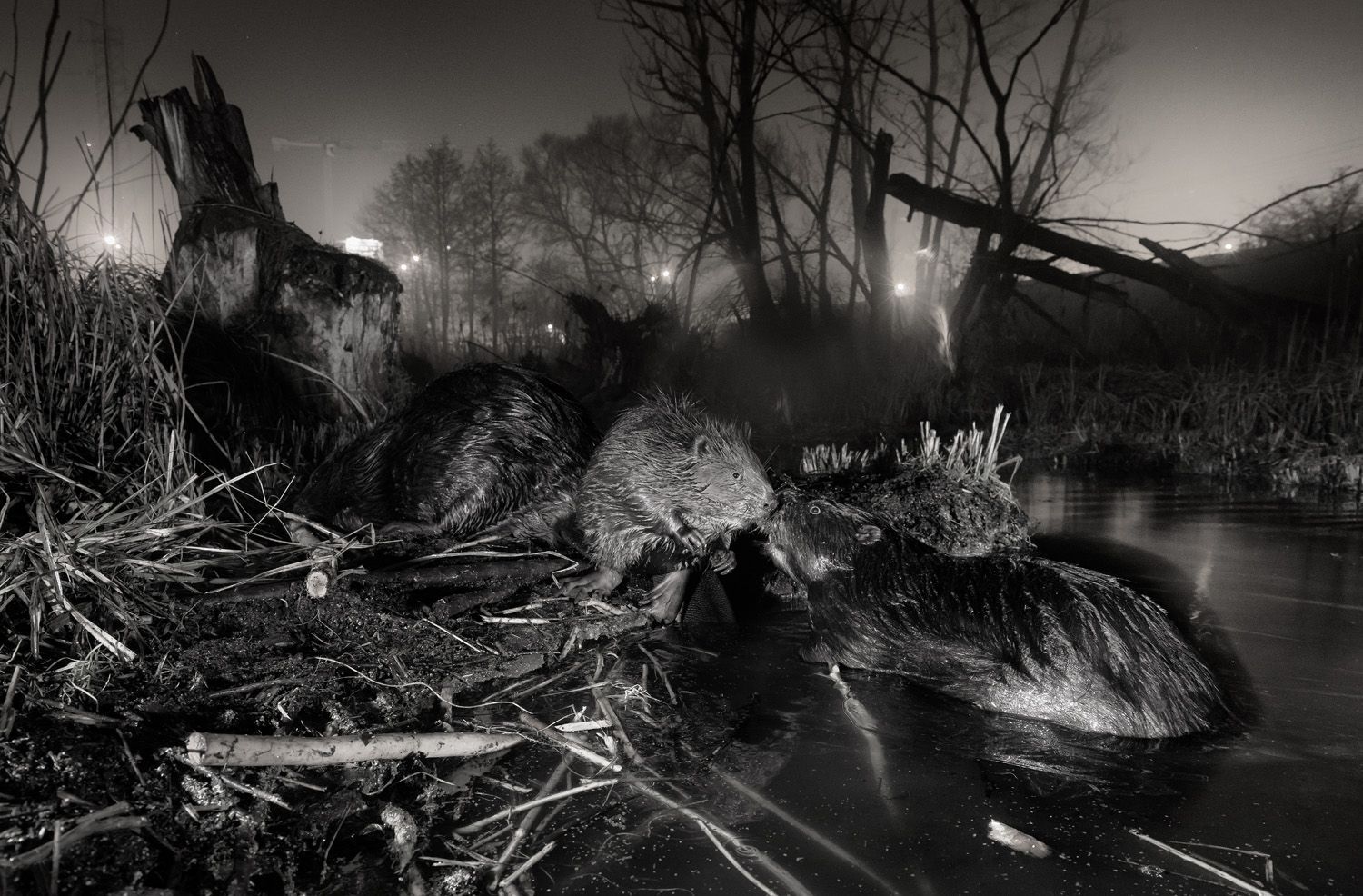
Jan Wieczorek won first place in the 2026 Rewilding Europe Award with Urban beavers, a night-time image showing beavers moving through a wetland in Olsztyn while apartment blocks and urban development glow in the background. The award is a special category within the European Wildlife Photographer of the Year competition, organised by the German Society for Nature Photography in cooperation with Rewilding Europe.
What makes the image so memorable is not simply the animals themselves, but the setting. Instead of a remote forest or river valley, Wieczorek’s beavers live in a city landscape shaped by roads, bridges, housing and people. The picture captures that unusual coexistence in a single frame.
- Find more news from Poland on our Homepage .
Fifteen years watching one urban wild community
Wieczorek has followed the beavers in Olsztyn for around 15 years, according to international coverage of the award. That long familiarity helps explain why the photograph feels so assured: it is not a lucky glimpse of wildlife, but the result of sustained observation of one place and the animals that have made it their home.
The official competition notes say the beavers have lived for years along one of the rivers flowing through Olsztyn, a major city in north-eastern Poland. Their territory is crossed by roads and railway infrastructure, and new apartment blocks are being built nearby. Yet the animals continue to thrive.
The judges responded not only to the technical quality of the photograph but to what it says. Rewilding Europe’s Viktoria Pezzei said the winning and commended images captured the essence of how humans and wildlife can live side by side. For the organisers, Wieczorek’s frame stood out because it tells a complete story in one image.
That was also the photographer’s own intention. In comments published with the award, Wieczorek said he wanted to show that nature does not always exist somewhere far away, but can survive next to homes, under bridges and in the middle of cities.
A Polish image with a wider European message
The result is a proud moment not just for one Polish photographer but for the way a Polish city appears in the image.
Olsztyn is not shown as a postcard landscape or tourist backdrop. Instead, it becomes the setting for a modern environmental story: wildlife adapting, water being restored, and humans and animals sharing the same space more closely than many people expect.
The competition’s organisers also emphasised the ecological importance of the beavers’ presence. According to the official description, the animals maintain their dams, help restore water balance, boost biodiversity and accelerate the natural self-purification of the watercourse between two large lakes, Krzywe and Kortowskie.
In other words, the image is visually striking because it shows something beautiful, but it is also meaningful because it shows something useful.
That combination helps explain why it travelled quickly beyond specialist photography circles after the 1 October announcement. The picture is atmospheric and unusual, but also immediately understandable. Viewers can see, almost at a glance, the contrast between the wetland and the surrounding development — and then realise it is not really a contrast at all, but a shared environment.
For Wieczorek, the award is international recognition. For Poland, it is also a reminder that some of the country’s most compelling natural stories are not always found in remote wilderness, but sometimes in the middle of a living, growing city.