

Poland is weighing deeper involvement in France’s emerging nuclear deterrence framework, with Prime Minister Donald Tusk confirming Warsaw is in consultations with Paris and other European partners about joining an advanced nuclear umbrella.
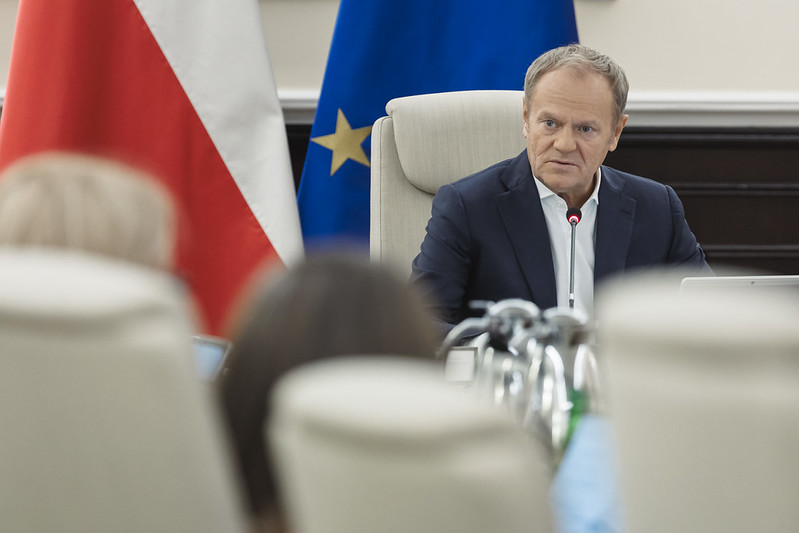
Speaking to reporters ahead of a cabinet meeting Tuesday, Tusk said France is in talks with several European states over participation in its nuclear deterrence program and confirmed that Poland is among those exploring the offer. He stressed that discussions are underway not only with Paris, which as a nuclear-armed power is leading the initiative, but also with countries that, like Poland, have expressed readiness to cooperate and have been invited into the project.
Tusk said his government is already in contact with Sweden and Denmark on the French proposal and indicated the coming weeks will be key for shaping the outlines of any potential Polish role. “In March there will be a nuclear energy summit in Paris, and there I will have an opportunity to talk about this not only with President Emmanuel Macron but also with our other European partners,” he said.
- Find more news from Poland on our Homepage .
The prime minister framed the talks as part of a broader effort to harden Poland’s defense posture at a time of heightened geopolitical tension in Europe and beyond. He underlined that Warsaw treats nuclear security “very seriously” and linked military considerations to the government’s domestic push to build civilian nuclear power plants. “We ourselves are investing a great deal in future nuclear power plants, and Poland will not want to remain passive when it comes to nuclear security in the military context,” Tusk said.
While he did not give details on what form Polish participation might take, Tusk suggested that cooperation would deepen over time as Poland’s own capabilities grow. He said Warsaw plans to work closely with allies, “including France, which came forward with this specific offer,” and that as Poland’s “autonomous capabilities” increase, the country will seek to prepare for “the most autonomous possible actions in this area” in the future.
The French initiative gained momentum Monday when Macron announced that France would increase the number of its nuclear warheads, explicitly tying the move to a reinforced deterrence posture in Europe. The French president said eight countries, including Poland, had signaled interest in advanced nuclear deterrence arrangements under French leadership.
Shortly after Macron’s speech, Tusk publicly acknowledged the ongoing talks. In a social media post, he said Poland is conducting negotiations with France and a group of its closest European allies on an advanced nuclear deterrence program, adding that Warsaw is “arming with friends so that enemies do not dare attack us.”
Security experts say the cooperation envisioned by Macron could involve several concrete elements designed to make deterrence more credible and more difficult to neutralize. In practice, the French scheme could see participating countries host French strategic air units on their territory, take part in joint exercises and stage demonstrative deployments of nuclear-capable forces beyond France’s borders. Paris argues that dispersing assets across Europe would complicate planning for any potential adversary and reinforce the perception that an attack on one partner risks a nuclear response.
Macron has at the same time drawn a clear institutional line, insisting that any decision to employ France’s nuclear weapons will remain the exclusive prerogative of the French president, with no co-decision mechanism for partner states. He has justified the proposed enhancements to France’s nuclear posture by pointing to the erosion of global arms control architecture and the need to adapt Western deterrence to a more unstable security environment.
For Poland, the debate over joining a French-led nuclear umbrella intersects with long-standing concerns about deterrence on NATO’s eastern flank and the credibility of security guarantees in the face of Russian military pressure. Tusk’s comments suggest his government sees added value in supplementing existing alliance structures with closer nuclear cooperation at the European level, even if operational control would stay firmly in French hands.
The prospect of Polish participation in the French program is likely to feed into a broader domestic discussion on the balance between national defense investments, reliance on NATO’s collective deterrent and emerging European security initiatives. As consultations proceed in the run-up to the Paris summit, Warsaw will have to weigh political, strategic and public opinion considerations while signaling resolve to potential adversaries and reassurance to allies.