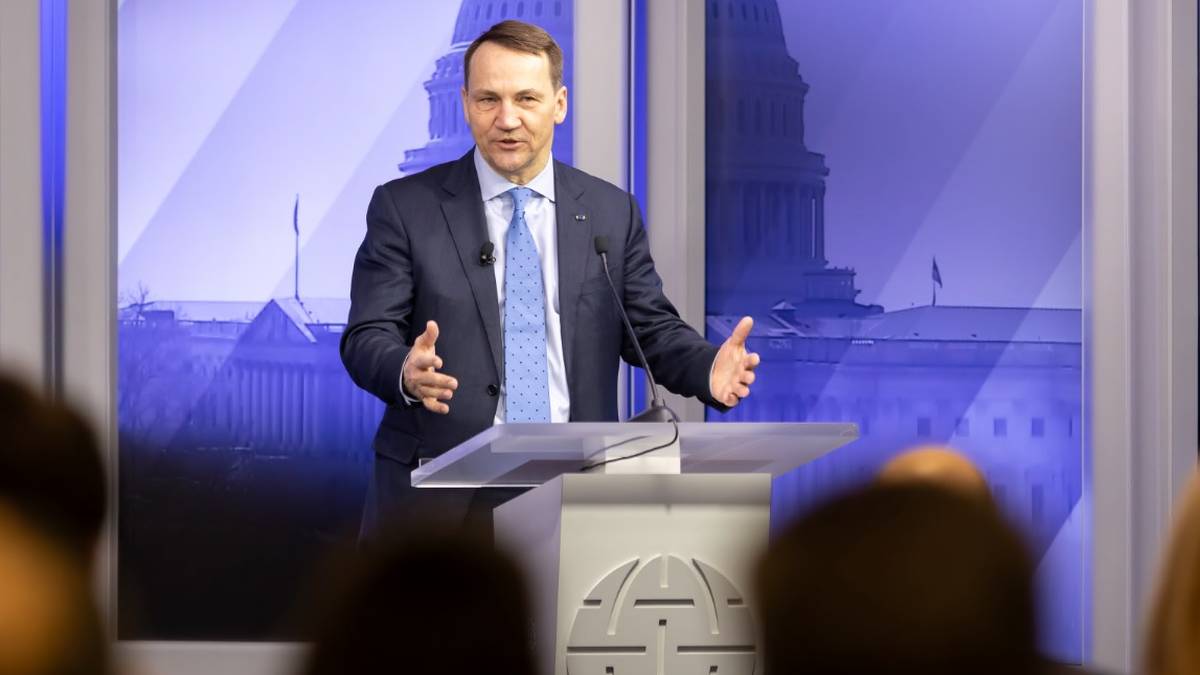
Polish Foreign Minister Radosław Sikorski has warned that NATO must prepare for the possibility of Russian hybrid attacks causing fatalities on allied territory, raising questions about when sabotage and covert operations should trigger a collective response from the military alliance.
In an interview with the Financial Times published on Monday, 12 October, Sikorski said the risk of deaths was increasing as Russia intensified activities intended to disrupt and destabilise European countries.
The Polish foreign minister, who also serves as deputy prime minister, argued that NATO would eventually need to determine when such operations crossed the threshold from hostile interference into an attack requiring a more substantial response.
- Find more news from Poland on our Homepage .
“If people start dying, then we’ll have to have another very serious conversation at NATO,” Sikorski told the newspaper.
He acknowledged that there was no predetermined definition of when Russian hybrid activities would cross that threshold, describing the decision as one that NATO members would have to make collectively.
Sikorski did not specify what form a stronger response should take, or suggest that the alliance had received intelligence confirming an imminent deadly attack.
His warning comes amid mounting concerns across Europe about suspected Russian sabotage, cyber operations, interference with critical infrastructure and other activities that Western governments have attributed to Moscow. Russia has denied Western allegations of orchestrating such operations.
When could a hybrid attack trigger NATO’s collective defence?
The distinction between conventional military aggression and hybrid warfare is central to Sikorski’s warning.
Hybrid operations can combine sabotage, cyberattacks, covert intelligence activities, disinformation and other methods designed to undermine an adversary without necessarily provoking an open military confrontation.
Unlike a conventional invasion, such operations can make it difficult to establish who is responsible, whether the activity constitutes an armed attack and what response would be proportionate.
Under Article 4 of the North Atlantic Treaty, member states can request consultations when they believe their security, territorial integrity or political independence is threatened.
Sikorski pointed to Poland and Estonia having already used that mechanism following Russian violations of their airspace.
In September 2025, Poland requested NATO consultations after multiple Russian drones entered its airspace. Estonia subsequently invoked Article 4 after three Russian MiG-31 fighter jets violated its airspace.
Those incidents prompted allied consultations and reinforced concerns about the security of NATO’s eastern flank.
Article 5, by contrast, establishes the principle of collective defence following an armed attack against an alliance member.
According to NATO’s official explanation of its collective defence obligations, particularly serious cyberattacks or other hybrid operations could qualify as armed attacks, with the decision assessed individually.
That does not mean an incident causing deaths would automatically trigger Article 5, nor would invoking it necessarily require every ally to take military action.
Sikorski’s remarks therefore concern how NATO should assess and respond to a potentially deadly incident, rather than announcing any change to the alliance’s existing commitments.
Concerns grow over Russian sabotage across Europe
The warning follows a separate Financial Times investigation into alleged Russian plots targeting European defence industry executives, published on 11 October.
Citing intelligence officials from five European countries, the newspaper reported growing concerns that Russian operatives were targeting senior figures in companies supplying military equipment, including drones, to Ukraine.


The reporting described fears that assassination attempts could form part of a wider campaign intended to disrupt European defence production and weaken assistance to Kyiv.
These are intelligence assessments and allegations reported by the newspaper, not independently established findings in every individual case.
The warnings are not confined to Poland.
On Monday, Reuters reported that German Interior Minister Alexander Dobrindt had warned of an intensifying campaign of hostile activity, describing the security environment confronting Germany as a form of shadow war.
European governments have increasingly linked incidents involving sabotage, cyberattacks and suspected covert interference to Russian state activity, although the evidence and legal status differ between individual investigations.
Poland calls for restrictions on Russian diplomats
Alongside his warning to NATO, Sikorski called for European countries to place greater restrictions on Russian diplomatic operations.
He urged allies to close Russian consulates, reduce the number of Russian diplomats operating in Europe and restrict their freedom of movement.
The Polish minister also advocated requiring Russian travellers entering the European Union to use biometric passports, arguing that the measure could make it harder for intelligence operatives to travel using false identities.
He backed further restrictions on tourist visas issued to Russian citizens.
Poland has already taken significant steps to reduce Russia’s consular presence. In October 2024, the Polish Foreign Ministry withdrew permission for Russia’s consulate in Poznań to operate, citing sabotage concerns and what it described as hostile Russian intelligence activity.
Sikorski subsequently ordered the closure of Russia’s remaining consulates in Poland.
He also urged other European governments to publicly attribute hybrid operations to Russia when they possessed sufficient evidence.
The diplomatic proposals emerged as EU foreign ministers gathered in Luxembourg on Monday to discuss Russia’s war against Ukraine and its escalating hybrid campaign.
According to the European Council’s published meeting agenda, the discussions were to examine the EU’s response to Russian activities targeting member states.
Sikorski’s proposals should not be confused with measures already adopted by the EU or a formally agreed NATO response.
For Poland, which borders both Ukraine and Russia’s Kaliningrad exclave, the concern is particularly immediate. Its government has repeatedly warned that hostile activities directed at European countries carry the risk of serious escalation.
The central question raised by Sikorski is whether NATO can establish an effective response to increasingly dangerous covert operations before an incident involving civilian deaths forces its members to make that decision under more urgent circumstances.