

Poland has joined a new inner circle of the European Union’s biggest economies, a move hailed in Warsaw as a strategic breakthrough for its influence in Brussels and its ability to help shape the bloc’s response to mounting global pressures.
The informal grouping, dubbed “E6” in Brussels, brings together France, Germany, Italy, the Netherlands, Spain and Poland — the six largest economies in the European Union. The format, first reported by Politico and confirmed by Spanish Economy Minister Carlos Cuerpo, is designed to break a yearslong political stalemate over building deeper and more integrated EU financial markets.
Cuerpo said the decision to close ranks among the six came after what he described as a “wake-up moment” triggered by threats from U.S. President Donald Trump to annex Greenland from Denmark, an EU member state. That episode underscored for key European capitals how vulnerable the bloc remains to sudden geopolitical shocks and how urgently it needs a stronger, more unified economic base.
- Find more news from Poland on our Homepage .
“The new group, called in Brussels E6, is an exclusive club of the six largest EU economies: France, Germany, Italy, the Netherlands, Spain and Poland, whose goal is to overcome the political gridlock that has for the past decade slowed efforts to create a U.S.-style financial market,” Politico reported, according to TVN24 Biznes. The idea is to pool political weight behind long-stalled reforms that would deepen capital markets, improve cross-border investment and give European companies better access to private financing.
Cuerpo framed the initiative as both economic and geopolitical. The E6 is meant to help Europe keep pace with the United States and China in a world where access to capital, cutting-edge technologies and critical raw materials is increasingly weaponized. “The aim is to undertake politically difficult discussions so that we can unblock issues that have so far remained frozen,” he said, adding that building “bridges” among the six could become a “good first step” toward broader EU-wide solutions.
The group is also expected to function as a coordination forum ahead of meetings of the Group of Seven and other key international gatherings. According to Politico’s description cited by TVN24 Biznes, E6 discussions are to cover strategic questions such as access to rare earth metals, an area where European industry depends heavily on Chinese supply and where Beijing has repeatedly signaled it could use export restrictions as leverage. “There are no limits in the discussions of this group. I think it should benefit everyone,” Cuerpo said.
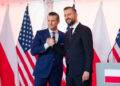
The first meeting of finance ministers from the six countries took place Monday in Brussels, bringing together what EU officials have informally started calling the Union’s “big six.” Poland was represented by Finance Minister Andrzej Domański, who argued that Warsaw’s seat at the table must translate into faster and more ambitious change. “It is important that we are in this format, but we want fast and ambitious reforms,” Domański said after the talks.
For Poland, the invitation to join E6 marks a symbolic step into the very core of EU economic decision-making after years of being seen primarily as a fast-growing peripheral state. With one of the bloc’s most dynamic economies, a growing industrial base and a pivotal geographic position on NATO’s eastern flank, Warsaw has pushed for greater say over the EU’s economic and security agenda. Participation in the new club gives it another channel to influence debates on defense investment, energy security and the future of the euro area architecture, even though Poland itself remains outside the single currency.
Yet the emergence of E6 is already stirring unease among smaller member states fearful of being sidelined. Countries such as Ireland and Portugal worry that the Spanish-backed format could push the bloc toward what they describe as a “two-speed Europe,” in which the largest economies set the pace and effectively ignore objections from the rest. TVN24 Biznes reported that these governments see the risk that, in the name of efficiency and scale, the new club will carve out de facto leadership over core economic files and leave smaller states with little more than a rubber stamp.
That tension touches a long-running fault line inside the Union between those who favor deeper integration among willing states and those who insist that major decisions must be shaped by all 27 members equally. Advocates of the E6 format argue that breaking the current deadlock on capital markets and financial reforms requires momentum from those with the most economic clout. Critics counter that bypassing formal EU structures could erode trust and feed resentment in capitals that already feel marginalized.
Organizers insist the new group will operate as a complement, not a rival, to existing EU institutions. By coordinating positions in advance, they say, the six can arrive at formal meetings of finance ministers and European Council summits with workable compromises instead of entrenched national red lines. If successful, that could make it easier to strike deals on sensitive topics such as banking union, capital markets union and new fiscal rules, all of which have been stuck in negotiations for years.
The next E6 meeting is scheduled for March 9 and will focus on defense investment and ways to strengthen the international role of the euro, TVN24 Biznes reported. With Russia’s war in Ukraine grinding on and pressure mounting for Europe to shoulder a greater share of its own security, ministers are expected to discuss how to mobilize private and public capital for defense and how to ensure European arms producers can scale up production.
The question of how to promote the euro globally is similarly tied to Europe’s broader strategic autonomy agenda. A stronger international role for the common currency could give the Union more leverage in sanctions policy, reduce its dependence on the U.S. dollar and make European markets more attractive to global investors. For Poland, which has not set a firm timetable for adopting the euro, the debate will test how far it is willing to align itself with deeper monetary integration while keeping its national currency, the złoty.
For now, officials involved in the talks emphasize the experimental nature of the format and stress that its success will depend on whether it can deliver concrete progress rather than just another layer of EU club-making. Still, the creation of E6 underscores a clear shift: in a more dangerous and competitive world, the EU’s biggest economies are looking for new ways to move faster, and Poland is no longer watching from the sidelines